Operations | Monitoring | ITSM | DevOps | Cloud

The latest News and Information on DevOps, CI/CD, Automation and related technologies.

Building a dev platform like a product: Inside The New York Times with Sneha Rao and Ahmed Bebars

Cortex co-founder and CTO Ganesh Datta sits down with Sneha Rao, VP of Product, and Ahmed Bebars, Principal Engineer, both from The New York Times Developer Platforms team, to discuss what it means to build and operate a developer platform at scale across a complex media organization.

Your platform team's name is holding it back

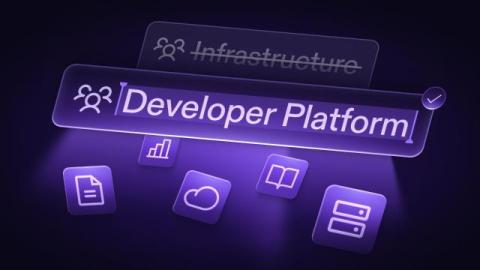
When you stood up your platform team, you probably spent more time on the org chart than on what to name it. Reporting lines, headcount, scope of the first charter, those felt like the real decisions. The name was administrative. Something to put in Slack and the directory and forget about. That was the most consequential decision you made. The name you give a platform team isn't just branding. It's a scope declaration.

How to Ship AI-Generated Code to Production

AI writes code. But shipping to production? That still takes a software engineer. In this GitKon talk, Chris Kelly from Augment Code breaks down what it actually means to use AI-assisted development to write production-ready code, not vibe code. If you've been using AI coding assistants and wondering why the output doesn't always make it past code review, this is for you. Chris covers: Key takeaway: The engineers who will thrive aren't the ones who let AI do everything. They're the ones who know how to review, direct, and architect around what AI produces.

How a Marketing Intern Ended Up Running Claude in a Terminal

Before I ever ran Claude in my terminal, I thought I already understood AI tools pretty well. Like most people, I had used ChatGPT, Google Gemini, and Perplexity for everyday tasks. Such as helping with schoolwork, organizing ideas, summarizing information, or getting through something faster when time was tight. They were useful, but they still felt separate from how real work happened.

Introducing Megaport DDoS Protection: Built-In Network Resilience for Megaport Internet

This fabric-native shield delivers private, professional-grade resilience that is easily added via the Megaport Portal in under 60 seconds. Megaport is evolving the connection. With the launch of Megaport DDoS Protection, we are securing the mission-critical Megaport Internet connection by filtering out malicious traffic before it ever reaches your platform.

How to reduce alert noise without missing what matters

Reducing alert noise involves drawing a line between incidents that need an immediate response and ones that do not. Get this distinction wrong and your team is either interrupted unnecessarily or misses something critical. In this guide, we’ll help you make that distinction clear. We’ll cover what counts as noise and how to reduce it without missing what matters.

Resolve's Agents of IT - S2Ep9 - When AI Personalization Gets too Personal

In this episode of Agents of IT, we dive into one of the biggest conversations shaping enterprise AI right now: personalization. From copilots vs autonomous agents to the “creepiness threshold” of hyper-personalized AI, we explore what organizations are getting right, what they’re getting wrong, and why context matters more than ever in the future of IT operations. Topics covered in this episode: The team also breaks down.

The State of DCIM Software in 2026

Data Center Infrastructure Management (DCIM) software has matured considerably over the past decade. Deployments are faster, interfaces are easier to use, integrations are deeper, and organizations across industries are seeing real, measurable results. According to Gartner, DCIM software has reached a critical inflection point in the Hype Cycle: the Plateau of Productivity.