Operations | Monitoring | ITSM | DevOps | Cloud

The latest News and Information on DevOps, CI/CD, Automation and related technologies.

An Introduction to Big Data Concepts

Gigantic amounts of data are being generated at high speeds by a variety of sources such as mobile devices, social media, machine logs, and multiple sensors surrounding us. All around the world, we produce vast amount of data and the volume of generated data is growing exponentially at a unprecedented rate. The pace of data generation is even being accelerated by the growth of new technologies and paradigms such as Internet of Things (IoT).

Downsampling and Exporting Stackdriver Monitoring Data

Stackdriver Monitoring contains a wealth of information about cloud resource usage, both for Google Cloud Platform (GCP) and and other sources. This post will explain how to use the Stackdriver Monitoring API to read, downsample, and export data from Stackdriver to BigQuery. Pub/Sub metrics will be used to demonstrate this.

Monitoring Kubernetes Clusters on GKE (Google Container Engine)

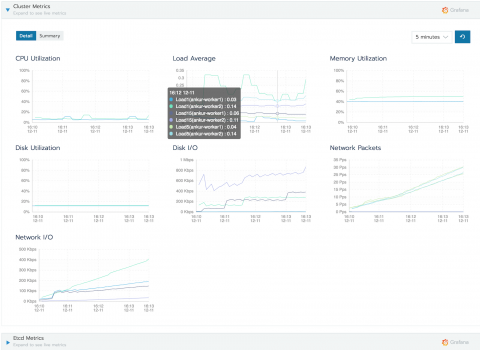
The Kubernetes ecosystem contains a number of logging and monitoring solutions. These tools address monitoring and logging at different layers in the Kubernetes Engine stack. This document describes some of these tools, what layer of the stack they address, as well as best practices for implementation including an example from the field, a quick start, and a demo project.

What is Azure Automation?

As Microsoft Azure continues to be developed and more automation options become available; Azure Automation, Logic Apps, ARM (Azure Resource Manager) and Azure Function Apps to name a few, the question is quickly turning from ‘how do I automate with Azure?’ to ‘what automation type do I use in Azure?’. Across our next few blogs we will seek to delve into the options available and look to define how they stack up against Azure Automation.

What you need to know to successfully run databases in production on Kubernetes

The Kubernetes community has made significant progress when it comes to easily deploying stateful services like databases. But what happens on Day 2? Day 2 operations are all about managing an application when things go wrong: nodes fail, networks are partitioned, a CVE comes out requiring a new version of Kubernetes to be deployed and all running apps upgraded.

Logging Kubernetes on GKE with the ELK Stack and Logz.io

An important element of operating Kubernetes is monitoring. Hosted Kubernetes services simplify the deployment and management of clusters, but the task of setting up logging and monitoring is mostly up to us. Yes, Kubernetes offer built-in monitoring plumbing, making it easier to ship logs to either Stackdriver or the ELK Stack, but these two endpoints, as well as the data pipeline itself, still need to be set up and configured.