Operations | Monitoring | ITSM | DevOps | Cloud

The latest News and Information on Cloud monitoring, security and related technologies.

11 DevOps Metrics To Monitor for Organizational Success

Businesses are always looking for ways to increase efficiency and eliminate waste. For software-driven companies, DevOps is one approach that helps to achieve this. The goal of DevOps is faster software delivery to the end-user while maintaining high software quality. DevOps enhances collaboration between operations and development teams for faster code deployment. When evaluating the effectiveness of your DevOps model, it is critical to use metrics relevant to your organization.

Elastic Cloud Value Calculator: Understand the economics of adopting Elastic Cloud

As your Elastic usage increases and your use cases expand, it's important to know the benefits and cost savings that you can achieve by running Elasticsearch as a service. But since every Elasticsearch implementation can vary by use case and deployment model, it can be complicated to tackle on your own. So with that in mind, we are excited to share the Elastic Cloud Value Calculator.

AWS Machine Learning Tools (2021 edition)

When you want to stay ahead and on top of things in a fast-moving industry, machine learning (ML) is surely one of the trending solutions. Today, innovative companies already have leading Machine Learning tools well-integrated into their processes. In comparison, your start could seem dreadfully slow. Or maybe you just don’t have the time or resources to invest in running your own Machine Learning training infrastructure.

If one public cloud is good, are multiple public clouds better?

Virtana recently published the results of a new State of Hybrid Cloud survey. One of the findings is that 81% of companies in the study who have started their migration to the public cloud have engaged multiple providers. This result tallies with a recent Gartner survey of public cloud users, in which 81% of those respondents said they are working with two or more providers.

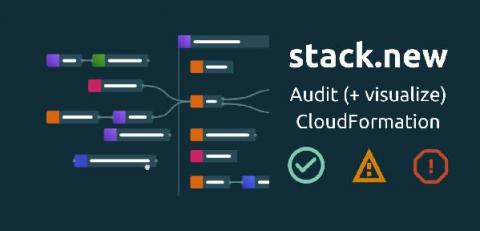
Hello, Stack.new

I’ve learned a lot about serverless in my first full year at Stackery after joining from the Ops-focused automation company, Puppet. I’ve learned how to deploy rich CMS-backed web applications in a serverless way, how to cast incantations using CloudFormation’s intrinsic functions, but most of all I’ve learned that there’s a lot to learn in order to be successful in AWS.

Further Tips on our Database Migration to the Azure Cloud Session at MS Ignite 2021

I was really stoked to deliver a session at Microsoft Ignite with my long-time friend and fellow Head Geek™, Tom LaRock, on the topic of migrating an on-premises SQL Server database to the Azure cloud. You can watch the session on demand here. In addition, Microsoft MVP and SQL Server expert David Klee provides an excellent recap on each of the major elements Tom and I discussed.

5 Universal Steps to Cloud Database Migration

Chances are if you’re reading this, you are (or are thinking about) moving to cloud. While cloud migration isn’t a new term and many people are migrating, there are a few things you should know before taking the leap. Migrating your database to the cloud is worth the hours of planning, sorting through data and running tests because if it’s not done right, it may come with more bad than good.

Are NoSQL Databases Relevant For Data Engineering?

SQL is great, but sometimes you may need something else. By and large, the prevalent type of data that data engineers deal with on a regular basis is relational. Tables in a data warehouse, transactional data in Online Transactional Processing (OLTP) databases — they can all be queried and accessed using SQL. But does it mean that NoSQL is irrelevant for data engineering?

The Déjà Vu Evolution of Cloud Computing

I believe that the evolution to hybrid cloud is inevitable. Not because it’s grabbing headlines, but because it mirrors the industry’s history of new technology adoption. Take the evolution of virtualization, for example. Going back 20 years give or take, virtual machines popularized by VMware, KVM, and Hyper-V started to gain traction.