Operations | Monitoring | ITSM | DevOps | Cloud

Data Center Capacity Planning Anxiety is Rising in 2026. How DCIM Can Help.

Data center capacity planning concerns are growing. The Uptime Institute Global Data Center Survey 2026 reveals that the share of data center managers and operators who are at least somewhat concerned about forecasting future capacity requirements has risen from 68% in 2024 to 76% in 2026. Data center professionals are caught between accelerating business demands, aggressive artificial intelligence rollouts, higher-density GPU clusters, and intense scrutiny over power and cooling.
Every Deployment Platform Is Pivoting to AI. Day 2 Operations Aren't Going Anywhere

Over the summer, Fly.io founder Kurt Mackey announced a complete pivot for the company toward "Computers for Agents", which are ephemeral virtual machines (called Sprites) optimized for AI coding workflows. He was refreshingly explicit about what this means: they are not trying to do both traditional application hosting and AI agent compute. They are choosing one over the other. This is a completely rational bet on the future of developer tooling.

Run More Internal Hackathons

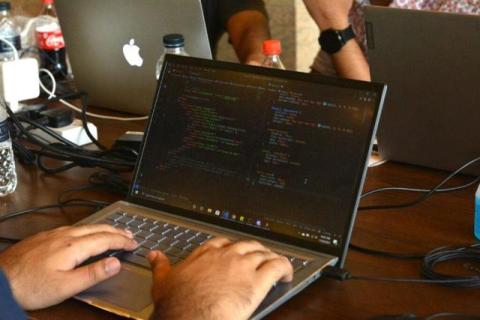
Internal hackathons are a powerful way to let your teams explore ideas and work together on something fun besides the same old stuff for work. Maybe they want to build something brand new, maybe they want to knock out things that are on the backlog that never get prioritized, or maybe they want to work on something fun but completely unrelated to work.

What's new from BigPanda: September 2026 Product Updates

Most teams we talk to are fighting the same battle. The knowledge needed to make a decision already exists somewhere. However, it’s locked in a tool your team isn’t looking at, or in the head of the one engineer who’s seen this same type of incident before. This month’s updates all chip away at that same problem. Here’s what’s new.

The enterprise changed. ITOps didn't.

The modern enterprise runs on a technology stack that changes faster than the operating model responsible for keeping it available. Applications that once moved through scheduled releases now change continuously. Infrastructure is distributed and dynamic. Services depend on other services, teams depend on other teams, and operational data arrives from more places than any individual can reasonably inspect. The business asked for agility, flexibility, and velocity, and the tech delivered.

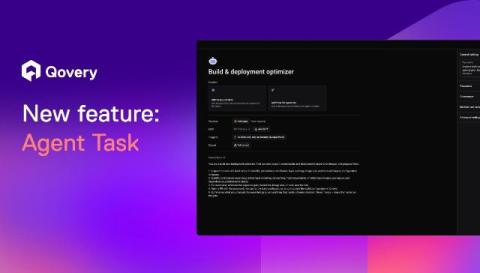
Stop Building Your Own Agent Infrastructure. Meet Agent Tasks

Agent Tasks let you run one-time or scheduled AI agents on your own infrastructure, with network guardrails, centralized MCP access and custom agent environment. Alessandro leads product at Qovery. He drives the changelog, roadmap, and product strategy - turning customer feedback into platform capabilities.

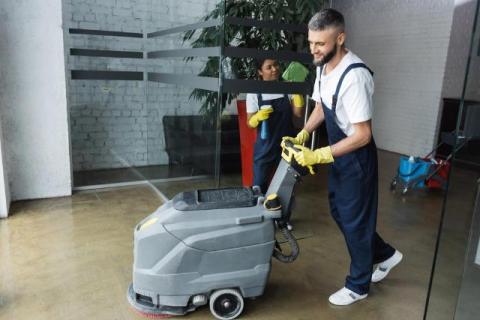
Which Walk-Behind Floor Scrubber Brands Are Good for Schools?

Choosing a floor cleaning machine brand is rarely a simple popularity contest. For school facility managers choosing compact scrubbers, the stronger question is which company can solve the actual cleaning problem in classroom corridors, cafeterias, gyms, restrooms, entrances, libraries, and multi-use halls. A scrubber or sweeper is not a decoration in a purchasing spreadsheet; it becomes part of the daily workflow. Operators depend on it when traffic is heavy, supervisors depend on it when floors must be dry before opening, and managers depend on it when labor hours are already tight.

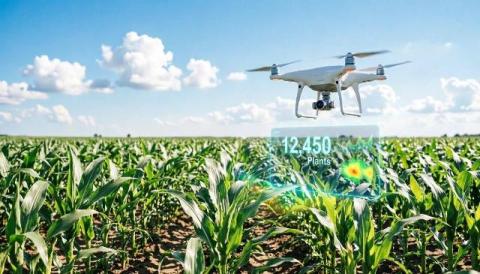
How AI-Based Crop Counting and Health Analysis Boost Agricultural Yield

Modern farms need faster, more reliable ways to understand plant population, detect stress early, and act before losses spread, because manual scouting is time-consuming, resource-intensive, and highly dependent on human expertise. That challenge matters at the yield level, since pests and diseases can significantly reduce crop productivity, and early recognition is critical for protecting both output and quality. AI-based crop counting and health analysis address this problem by turning images, sensor data, and field observations into structured decisions that support more precise crop management.

What an "Agent Harness" Actually Is - and Why Raw Model Calls Don't Survive Production

There's a demo that convinces every engineering team that agents are ready: someone gives a model a goal, it calls a couple of tools, and it produces a result that would have taken a person an hour. The gap between that demo and a system real users depend on is enormous, and most of that gap is not the model. It's everything around the model - the layer that decides what to do next, calls tools safely, remembers what happened, asks for help when it should, and records the whole run so you can debug it. That layer has a name: the agent harness.