Operations | Monitoring | ITSM | DevOps | Cloud

The latest News and Information on Log Management, Log Analytics and related technologies.

How to Track Your Company's Rating on a Website

Websites provide advisory services, research, and user reviews on SaaS companies to help users find the right product for their needs. Information and reviews shared by genuine users of your product or service is the strongest recommendation that can be received by your potential customers. This is why online user reviews are important for eCommerce and SaaS companies.

How to Extract Numerical Data from a Web Page for Dashboarding and Alerting

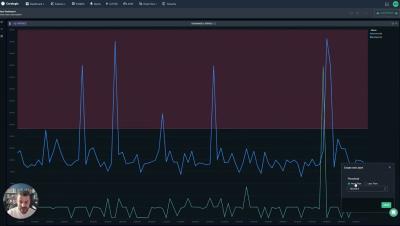
Over the years working as a software engineer and now a product manager, I’ve encountered multiple situations where I needed to extract numerical data from a page on a periodic basis and create visualizations, typically line charts to help me see trends over time. For example, I wanted to extract product prices and monitor them over time. Or, I wanted to query a search engine periodically and extract the number of matches or the position of a specific page for SEO purposes.

Grafana Loki 2.9 release: TSDB volume endpoints, remote rule evaluations, LogQL optimizations

The Loki squad is excited to announce Grafana Loki 2.9 is here! For this release, we’ve developed additional TSDB endpoints to help you better understand your log volume; introduced query language optimizations to make parsing more performant; and restructured our documentation so it is easier to use. This coincides with the release of Grafana Enterprise Logs (GEL) 1.8, so all the features discussed here are available in both Loki 2.9 and GEL 1.8.

Hot Topic: Increasing Cost-Efficient Observability with Cold Tier

Even as the global economy shows signs of a rebound, today’s observability customers are more focused than ever on driving utmost value from their investments. This isn’t simply because economics have forced organizations to closely review overhead and drive out unnecessary costs; the reality is that observability has become one of the leading budget items for every cloud software organization, full stop.

An Introduction to the OWASP API Security Top 10

If you ever watched Stargate, then you have some understanding of how application programming interfaces (APIs) work. While APIs don’t give you the ability to traverse the galaxy using an alien wormhole, they do act as digital portals that allow data to travel between applications. However, as sensitive data moves from one application to another, each API becomes a potential access point that threat actors can exploit.

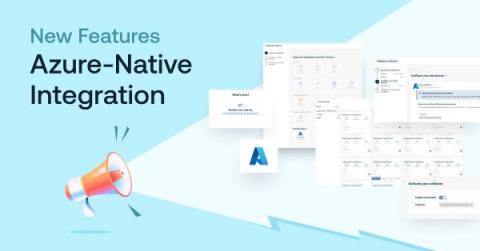
Simplify Azure Monitoring with Logz.io's New Azure-Native Integration

If you’re looking to monitor Microsoft Azure infrastructure with Logz.io, we’re now making it easier than ever with our new Azure-native integration Typically, collecting infrastructure metrics from Azure involves installing and configuring data collection components on your system, such as Prometheus, Telegraph, or a number of proprietary agents that are specific to different vendors.

12 DevOps Best Practices Teams Should Follow

DevOps is a software development philosophy that helps organizations achieve faster delivery, better quality, and more reliable software, making it easier to adapt to changing business needs and customer demands. However, implementing DevOps can be challenging on many levels. It requires changes in culture, processes, skills, knowledge, and tools, which can encounter resistance from traditional silos within organizations. So, how can you successfully implement DevOps within an organization?

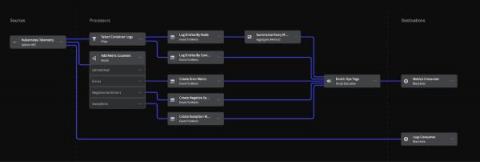
Understand Your Kubernetes Telemetry Data in Less Than 5 Minutes: Try Mezmo's New Welcome Pipeline

Most vendor trials take quite a bit of effort and time. Now, with Mezmo’s new Welcome Pipeline, you can get results with your Kubernetes telemetry data in just a couple of minutes. But first, let’s discuss why Kubernetes data is such a challenge, and then we’ll overview the steps.

Effective Logging in Node.js Microservices

Many modern software applications are built with a microservices architecture, and Node.js has become the runtime environment of choice for many developers building microservices. However, working with logs in microservices—especially as complex applications comprise dozens (or more) microservices—is a challenging and cumbersome endeavor. Logging is a crucial part of building and maintaining an application.