
Operations | Monitoring | ITSM | DevOps | Cloud

The latest News and Information on Log Management, Log Analytics and related technologies.

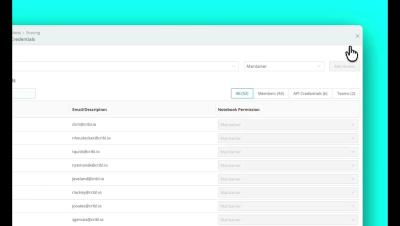
Cribl Notebook templates in Cribl Search

Investigations are time-sensitive, and analysts shouldn’t waste time recreating the same workflows or rewriting familiar queries. Whether troubleshooting infrastructure, investigating suspicious IPs, or analyzing host activity, teams often rely on duplicating old processes and copying query snippets — a slow, inconsistent approach that’s hard to scale.

Action trails: The missing link between AI and human trust

When people talk about trusting AI, they usually focus on the interface. It summarizes and uses confident language with a level of clarity that feels reliable. But that’s all window dressing. None of it builds trust. Trust doesn’t come from what the AI says. A verifiable record of what the AI did makes it trustworthy.

When your agents hallucinate at 2 am, it is not a model problem

The first time an AI assistant suggests "restart the service" during a live incident and nobody on the bridge can tell whether that suggestion came from a current runbook, a stale wiki page, or thin air, you stop caring about model benchmarks. You start caring about what the agent actually knew, where that knowledge came from, and whether you can trust the chain of reasoning behind it.

3 things you need to know about headless observability

If you're building agents trying to figure out the best way to actually make them successful in production, you're going to want to know about headless observability. Headless observability means an agent can access information about the health of your system through a CLI instead of clicking around dashboards. It's the data layer that going to unlock serious autonomy and allow you to scale with agentic workloads.

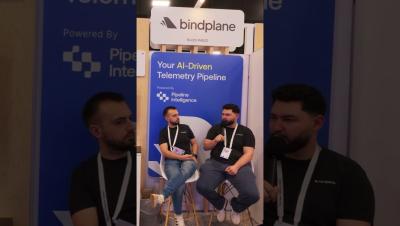
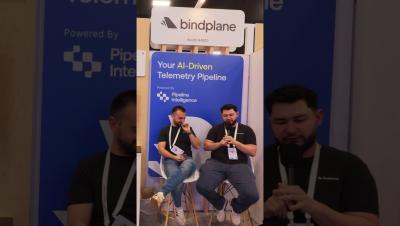
One Collector, Two Teams: How Bindplane Bridges Security and Observability with OpenTelemetry

Observability engineers will spend weeks tuning instrumentation. Security engineers? They want a collector installed and logs flowing — yesterday. And that's actually the magic of OpenTelemetry + Bindplane: from day one you're routing firewall logs, endpoint data, server logs straight into your SIEM with zero instrumentation lift. One toolchain. Two teams. No silos. Filmed at Google Cloud Next '26 — Las Vegas bindplane.com#OpenTelemetry.

From Phishing to SQL Injection: How Breaches Actually Happen

Critical vulnerabilities are critical because they're easy to exploit — but most breaches don't even need them. Tony explains why phishing remains the dominant attack vector, why strong instrumentation matters for forensics (tracing an API call through a database to see exactly what was leaked), and how observability data becomes security data when something goes wrong. The system is harder to breach than the human. And that's the whole game.

What Is Log Monitoring? Pipeline, Pitfalls, and Practices for 2026

Catching a cascading failure in the first 90 seconds is one of the better feelings in production engineering, and it almost always comes back to your log monitoring pipeline doing its job upstream of the alert. The teams that land there consistently treat log monitoring as a real-time detection layer in its own right, and the choices you make in that pipeline shape how every incident plays out for years.

Builder in the loop: Henry Andrews on building AURA like production software

An interview series with the people building Mezmo’s open-source agentic harness for production operations. Builder in the loop is a Mezmo interview series focused on the engineers, product leaders, and operators shaping AURA, our open-source, MCP-native agentic harness for production operations. The goal is to get past the polished product layer and talk through the decisions that matter when AI starts interacting with real systems. What should agents be allowed to do?