The latest News and Information on Monitoring for Websites, Applications, APIs, Infrastructure, and other technologies.
When you send an email or load a website, you probably never think about how the data gets from your computer to the server that needs to process it. But something does have to decide how the data will move across the vast expanse of the Internet – and, in particular, which of the virtually infinite number of potential routes your data will take as it moves from your device to a server and back again.
When you set up on-premise digital infrastructure, it is crucial to enable your devices to communicate with each other. The devices on your network should be able to send and receive data packets to handle requests and send responses back to callers. One of the components that allow data transmission to the proper destination is the network switch. The network switch plays an important role in distributing data packets to devices.
Networks today span the world and provide many connections between geographically disparate data centers, and public and private clouds. This creates a variety of network management problems. If your network is not working properly, it can be very difficult or even impossible to get the most productive or correct operation of your applications. A sophisticated network requires constant monitoring using the right tools and creating a network performance monitoring strategy.
Understanding Metrics, Logs, Events and Traces - the key pillars of observability and their pros and cons for SRE and DevOps teams.
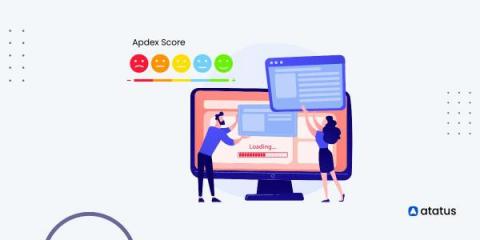
Do you know what your website users are really experiencing? Are they satisfied with your website's performance? Are they able to easily navigate and find what they're looking for? Real User Monitoring (RUM) is a powerful technique that can answer these questions and more. By collecting and analysing data on real user interactions, RUM provides valuable insights into user behaviour, website or application performance, and overall user experience.