Handling GraphQL Errors Using Sentry
As the adoption of GraphQL is rising steadily, teams often come across the natural question of how to deal with errors that pass service boundaries and propagate from API endpoints to clients and consumers.


The latest News and Information on APIs, Mobile, AI, Machine Learning, IoT, Open Source and more!
As the adoption of GraphQL is rising steadily, teams often come across the natural question of how to deal with errors that pass service boundaries and propagate from API endpoints to clients and consumers.
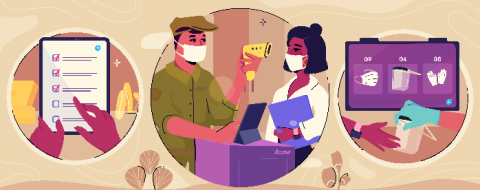
As companies prepare for the workforce to return to work, a myriad of decisions must be made. Return to work policies must encompass a full understanding of the needs and questions of its employees. The other top need is a true assessment of safety as it relates to COVID-19. How does the new place differ from one that is familiar? From the perspective of the employee, there may be sentiments of fear, uncertainty, and reluctance.
From smart thermostats and grocery store checkouts to public utility infrastructures and industrial manufacturing lines, the Internet of Things (IoT) is all around us—and growing larger every day. But with this rapid growth comes a number of operational challenges: IoT devices collect a large amount of data, and are often distributed across harsh, ever-changing environments.
The way we work has fundamentally changed in recent months due to the impact of the global COVID-19 pandemic. As more employees are working remotely, organizations are looking at new ways to ensure their workers can stay productive and secure. We released Splunk Remote Work Insights (RWI) to help IT and security teams have insight into the systems that their employees rely upon while working remotely.
Use of AI can be critical when developing systems to support social good, with some inspiring examples using Splunk in healthcare and higher education organisations. According to our State of Dark Data report, however, only 15% of organisations admit they are utilising AI solutions today due to lack of skills. So how can we help organisations unlock the potential of AI?
OpenTelemetry — the merger of OpenCensus and OpenTracing — appeared in May of 2019, led by companies like Omnition (now a part of Splunk), Google, Microsoft, and others who are pushing the curve on observability. OpenTelemetry is a project within the Cloud Native Computing Foundation (CNCF) that has gathered contributors and supporters far and wide, becoming one of the most active projects found in open source today. It’s currently #2 behind only Kubernetes!
Artificial intelligence refers to the machine's ability to learn and think. Given that it sort of mimics how humans think and reason, AI's application is virtually endless. AI reduces human error, do a task that is risky for humans to do, help humans solve complex, and so much more. With the emergence of artificial intelligence, concerns about data privacy have been brought into the light. Artificial intelligence relies on our personal information to learn.
Crashes are something we know a thing or two about. We see a lot of reasons why apps crash, but we also see when a lot of popular mobile apps crash at once, that’s something we notice. Crashes across many mobile apps at the same time is not typically a result of an app-specific code update. I mean, there’s a non zero chance that hundreds of developers published broken apps… but these widespread issues are likely a result of two things.
Looking to get some REST endpoints monitors quickly? Follow the below steps to setup a could REST monitors in about 15 minutes (weather in this demo).