What's new at Aiven: Q4/2022
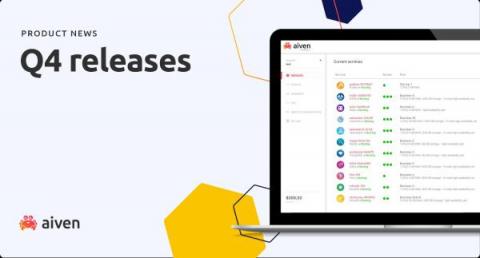
Things are happening at Aiven! Find out what we released in the last quarter of 2022. Warning: there’s a lot of it.


With a standard model for monitoring data across the organization, different teams can use a common infrastructure and extract maximum value from it. Monitoring (also sometimes referred to as observability) involves collecting and analyzing data from a source over time to track its health and/or performance. Because change occurs over time, virtually all monitoring data is time series data, meaning it has a timestamp.
Log management tools improve security, help troubleshoot issues, and enable system monitoring. This log management guide defines key terms and explains the benefits of centralized tools.
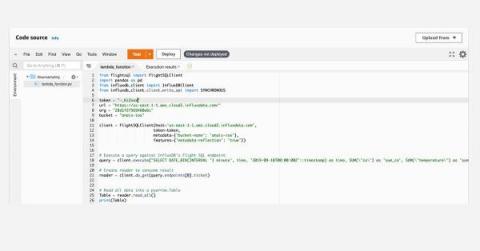
This tutorial covers how to perform downsampling with the new InfluxDB storage engine, InfluxDB IOx, in InfluxDB Cloud (available on AWS us-east-1 and AWS eu-central-1 starting January 31st) using AWS Lambda. This tutorial describes how to: InfluxDB IOx addresses key user needs including (but not limited to): We achieved these goals by building InfluxDB IOx on the Apache ecosystem (Apache Parquet, Apache DataFusion, Apache Arrow, and Apache Flight SQL).