Operations | Monitoring | ITSM | DevOps | Cloud

CA distrust wargame: moving every certificate in 10 minutes

Last week, dozens of schools found out their certificate authority was being distrusted and they needed to replace all of their certificates in a few days. We wanted to know how we’d handle it if our own CA went away, and how long it would take. So we tried it with one of our other products. It has 6 certificates from Let’s Encrypt, deploying to 18 targets across Windows IIS, Linux nginx, Elasticsearch, and a mail server. Then we wargamed it: “Let’s Encrypt is being distrusted.
The Hard Part of Incident Remediation Is Knowing When to Act

A critical application slows overnight. Monitoring identifies an unhealthy component, and an engineer finds a familiar remedy: restart a service. The command takes seconds. Determining whether the restart will restore the application or disrupt another dependency takes far longer. That is the real challenge in enterprise incident remediation. Most IT teams already know how to automate a task.

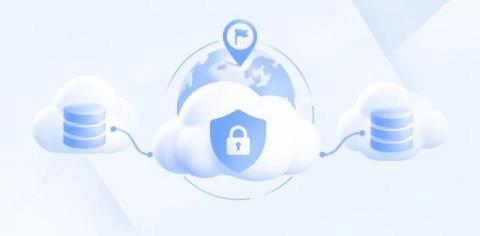
What is a Sovereign Cloud?

A sovereign cloud is a cloud computing environment designed to keep data, infrastructure, and operations under the control of a specific country or jurisdiction. It helps organizations maintain control over who can access their data and how it is managed. Depending on the provider and service, this may include storing data within national borders, using locally governed infrastructure, and ensuring that operations comply with regional regulations.

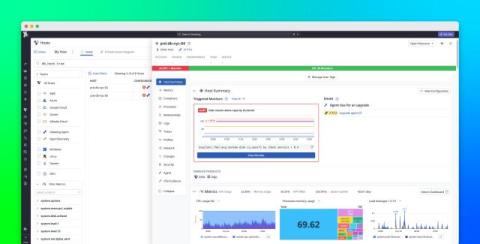
Match monitoring depth to workload needs with Infrastructure Basic

A back-office server that runs out of disk space can interrupt an important internal workflow. A process that stops on a staging host can delay development. Although workloads like these might not require application-level instrumentation, teams still need to know when the hosts that support them require attention. Without a monitoring solution tailored to these requirements, teams have to apply more monitoring than the workload needs, maintain a separate tool, or accept a gap in visibility.

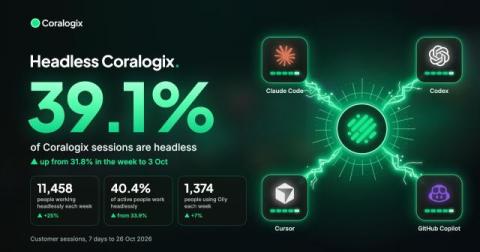
39% of Coralogix sessions are now headless

We set out to understand how customers were using Coralogix from outside the web app. Olly answers questions about a system in plain language. Coding agents query logs, examine traces, read metrics and configure the platform through the Coralogix CLI and MCP server. We wanted to see how much of this was becoming part of everyday work. In the week of 20–26 October, 39% of Coralogix sessions included Olly, the CLI or MCP.

Why AI-Generated code still needs tests

AI has made life easier for us developers. Dozens of AI tools are getting more advanced every day, shortening and speeding up the development cycle. Converting an idea into a concrete MVP is faster than ever before. Intelligent models turn your ideas into a working project with just a few prompts. End users or product owners can see the application, use the beta version, and give feedback on the spot.

Demystifying NODE

Having spent significant time working with the Network Observability Deployment Engine (NODE), I can confidently say that modernizing network observability does not have to feel like black magic. NODE simplifies how we deploy, scale, and manage complex network observability environments. Whether you're working with Kubernetes for the first time or streamlining an enterprise monitoring stack, NODE brings structure and clarity to the setup process. At its core, NODE relies on two main building blocks.

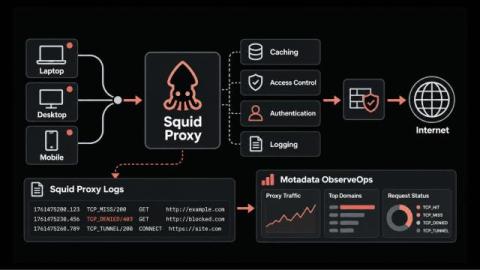
What Is Squid Proxy and How to Keep It Fast, Secure and Observable

How long does it take your service desk to rule the proxy in or out when a user says a site won't load? The proxy carries every outbound web request in most companies, and it still tends to be checked last. So service desks guess, even though the proxy has already logged what happened to that request. For a lot of those companies, the proxy is Squid. It has cached pages and enforced web policy for close to three decades, and it logs every request it touches.

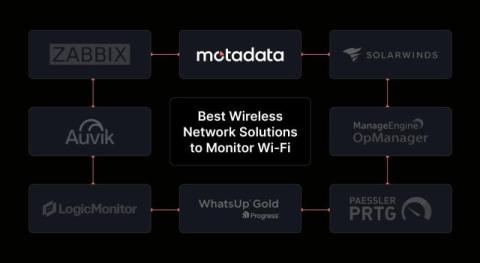
8 Best Wireless Network Solutions to Monitor Wi-Fi in 2026

If your Wi-Fi keeps slowing down or dropping connections, checking whether your access points are online won't tell you much. You need to know what's causing the problem, whether it's weak signal strength, overloaded access points, or too many connected devices. Wireless network monitoring tools help you track these issues, monitor access point health, and spot problems before they affect more users.

Deploying Apache Airflow on Aiven Runtime

When we first introduced people to Aiven Runtime, before it even had that name, we kept getting asked: "Can we schedule things?" If you come from a Unix background, that tends to cause a reflexive reach for the cron tool, which provides basic scheduling at fixed intervals. But if you've spent more time with distributed software, you're more likely to think of Apache Airflow, which can do a lot more (although, yes, you can use Airflow to schedule tasks at fixed intervals if you want).