Operations | Monitoring | ITSM | DevOps | Cloud

Test Behavior, Not Choreography

The spy from post 4 is a sharp tool. Once a test can record every interaction, it is tempting to assert on all of them. The result looks thorough, but it is usually a transcript rather than a useful specification. This post takes a test written that way, makes a change that no customer could possibly notice, and watches the test fail anyway. This is part 5 of a ten-part series. The code is in Java, Node.js, Go and Python.

Make Failure Boring with Mocks

Every codebase has a failure path nobody has run. Not through laziness, but because reproducing it requires a backend dependency to misbehave on cue. In the package notifier, the carrier must refuse, stall, or return nonsense at the exact moment the test runs. So the retry logic ships unverified and everyone hopes. The seam from post 2 already gives the test control. A seam is a place where you can change what code does without editing that code.

Did It Actually Send?

The notifier has returned a message throughout this series, which made testing almost suspiciously easy. Assert on the return value and you are done. Real notifiers do more than build strings: they send them. Once a message goes to an email provider or SMS gateway, the function may return nothing useful. When that change lands, every existing test loses the value it asserted on. This is part 4 of a ten-part series. The code is in Java, Node.js, Go and Python.

MCP Servers 1.1.0 Add Flexible HTTP Routing and CLI Connection Management

We are pleased to announce the release of MCP Servers 1.1.0, bringing new configuration options for HTTP-based deployments and expanded command-line capabilities for managing database connections. The new version makes it easier to control how MCP Servers are exposed over HTTP, host multiple MCP Servers under a single hostname, and configure connections directly from the command line.

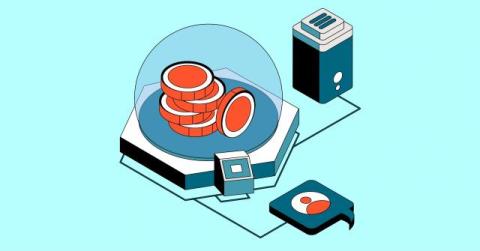
Cloud Cost Management for Observability: A Practical Guide

Observability spend is outgrowing infrastructure budgets. What drives the cost up, how pricing models work, and a practical framework to manage it. Sejal Pandey works on content and growth at Last9, writing about observability, reliability, and SRE practices.

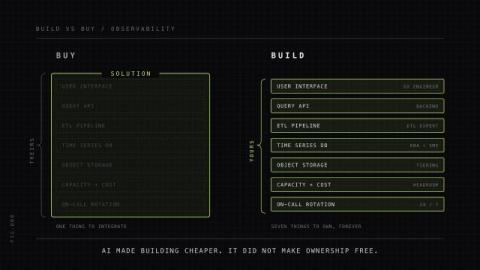
Why you should (not) build your own observability stack

If you are able to build it better than your vendor, then change your vendor. Not build it. Rishi builds large-scale observability systems at Last9, focusing on reliable and cost-efficient telemetry infrastructure, and writes about the practical lessons learned while operating ClickHouse, VictoriaMetrics, and OpenTelemetry in production.

Why compliance keeps slowing your releases (and what to change first)

A team ships at a steady pace for most of the year. Then an audit approaches, and delivery slows. Engineers get pulled off feature work to support the audit, producing the configuration exports, logs, and environment checks that the evidence depends on. The slowdown lasts as long as the audit does. It is tempting to read this as a team that needs to move faster or be bigger. It is usually neither.

LLM token cost: pricing per token explained

LLM token cost is the price a provider charges per token a model reads or writes, quoted in dollars per million tokens. Input and output bill at separate rates, with output priced at roughly 5x input. As of September 2026, published rates range from under $0.10 to more than $180 per million tokens on top-end reasoning tiers. In late 2025, Hardik Sonetta of Thomson Reuters Labs published a warning about the most common prompt caching mistake in production.

Shipped: Rightsize Kubernetes workloads without leaving your MCP client

Changing a Kubernetes resource request takes two numbers: what the workload requests, and what it uses. The CloudZero MCP server now returns both, by cluster, namespace, or workload. This gives you a number you can defend. Usage comes back as P95 over the date range you query, 30 days by default. When an engineering lead asks whether a service runs on a smaller request, that is the figure that settles it. Over-provisioning and under-provisioning show up on the same query.