Operations | Monitoring | ITSM | DevOps | Cloud

Commercial Security Systems and Operational Resilience - What Businesses Need to Know

In most organizations, "security" has quietly become shorthand for cybersecurity. Budgets, headcount, and executive attention flow toward firewalls, endpoint protection, and threat detection - and rightly so. But this focus has created a blind spot. The physical layer of security, the cameras and access controls and alarms that protect the building itself, is too often treated as a facilities expense rather than what it actually is: a core component of operational resilience.

Top 5 Best Sites to Buy Facebook Followers, Likes & Views (2026 Tested)

Facebook still holds enormous weight in digital marketing. A page with a thin follower count struggles to build credibility, and a video with zero views gets buried before it has a chance. That is why a growing number of businesses, creators, and marketers turn to paid growth services to establish early social proof.

A Guide to Planning Posters Around City Movement

City movement is never random. People follow predictable patterns shaped by work hours, transport routes, shopping habits, dining precincts, events and neighbourhood routines. Effective poster planning starts with understanding those patterns, then placing creative where it can be seen often, remembered easily and connected to the right audience at the right moment.

How Global Contractors Strengthen IT Operations Teams

IT operations never really stop. Servers need monitoring at 3 a.m., security patches can't wait for Monday morning, and a system outage in one country can affect customers halfway around the world. This constant demand is one of the main reasons many companies now hire global contractors to support their IT teams. Instead of trying to staff every shift and every skill set locally, businesses are looking beyond their borders to build IT operations that are faster, more flexible, and better equipped to handle whatever comes their way.

How AI Scribe Medical Tools Improve Healthcare Efficiency

Healthcare workers spend a huge part of their day on paperwork instead of patients. Doctors often joke that they trained for years to practice medicine, only to spend half their time typing notes into a computer. This is exactly the problem that AI scribe medical tools are designed to solve.

Achieving sovereign and secure AIOps with Ollama and OpManager

Enterprise IT networks power business operations across the world. As businesses scale to catch up with an increasingly-demanding user base, networks also grow more complex. IT teams managing these networks have to monitor more data than before, under more stringent SLA terms, with little room for failure. Trying to do this manually across thousands of devices can take a lot of time and effort, and are prone to errors.

June 24 Global Shopify outage: Timeline and impact

On June 24, 2026, Shopify experienced a widespread service disruption that affected storefronts, admin dashboards, and merchant access across multiple regions. While the outage did not impact every user, reports quickly surfaced from merchants around the world who were unable to access stores, log in to administrative tools, or complete routine operations.

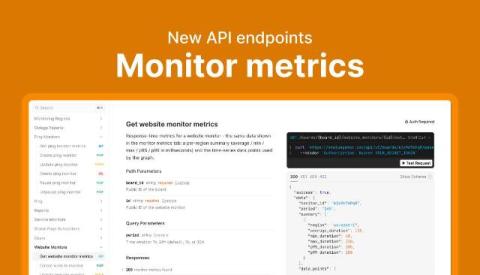
Monitor metrics now available in the v3 API

Monitor metrics are now available through the StatusGator v3 API for both Website Monitors and Ping Monitors. These endpoints provide the same latency and performance data available in the Monitor Metrics tab, making it accessible through the API and MCP server. You can find the endpoints in the API documentation.

Replacing Your Legacy Monitoring Platform? Start with a Plan.

Whether you're using SolarWinds, PRTG, Datadog, or another long-standing monitoring solution, chances are your environment has evolved significantly since the platform was first deployed. New applications have been added. Infrastructure has expanded into cloud environments. Teams have developed custom dashboards, reports, alerts, and workflows. Over time, monitoring becomes deeply woven into daily operations. That's why many organizations continue using tools that no longer meet their needs.