Operations | Monitoring | ITSM | DevOps | Cloud

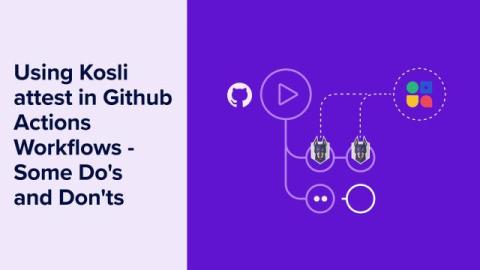
Using Kosli attest in Github Actions Workflows - Some Do's and Don'ts

The heart of Kosli’s functionality lies in its attest command. Think of it as a digital notary for your CI process. Every time you complete a significant step in your pipeline (e.g., a security scan, a build, a deployment, etc) you use kosli attest to create an immutable record of that event. However, integrating Kosli into your existing CI workflow isn’t always straightforward. You might find yourself grappling with questions like.

Record an immutable record of all changes made to your LaunchDarkly feature flags with Kosli

We’re thrilled to introduce our latest integration with LaunchDarkly! This powerful combination allows you to keep an immutable record of all changes made to your feature flags using Kosli Trails, ensuring you have the information you need for audits, compliance checks, security investigations, and incident responses.

Introducing Kosli's Logical Environments: Gain total visibility and control over complex systems

In today’s fast-paced development landscape, environments are no longer simple or isolated. You’re managing resources that span across development stages, geographies, and technologies. And as those environments grow more complex, so does the need for a more logical and efficient way to manage them.

Streamline code quality: Integrating SonarCloud and SonarQube scanning with Kosli for automated compliance

Static code analysis is an important part of testing your software to ensure it is release-ready. In contrast to dynamic testing, which involves executing your code to find errors, static analysis uses automated tools to “look” through the code, without executing it, to find potential errors (including potential security issues) and bugs. Since the code does not need to be executed, static testing can begin much earlier in development than dynamic testing.

The high stakes of SDLC compliance: Lessons from EVE Online's battle of B-R5RB and Equifax

n our previous exploration of The Punchcard Paradigm, we traced the roots of modern compliance practices back to the early days of computing. We saw how the physical constraints of punchcards shaped programming practices and how those practices lingered long after the technology had evolved. Now, let’s dive deeper into why modern compliance is more critical than ever in today’s digital landscape.

Just the facts" Introducing Software Delivery Evidence Management (SDEM)

Picture a gruff-voiced sergeant from the classic TV series “Dragnet,” but instead of solving crimes, they are navigating the complex world of software delivery. Their catchphrase, “Just the facts” isn’t just a catch phrase – it’s the mantra we need in today’s high-stakes world of DevOps, AppSec and Compliance.

From lean manufacturing to DevOps: The software factory revolution

In our journey through the evolution of compliance in the DevOps era, we’ve seen the limitations of traditional compliance methods and the high stakes of compliance failures. Manual processes, siloed teams, and a lack of automation have turned compliance into a bottleneck, hindering the agility promised by DevOps.

The Punchcard Paradigm: Tracing the Roots of Modern Compliance

In the early days of computing, creating software was a physical act, more akin to factory work than the streamlined digital process we know today. Programmers meticulously transcribed logic onto coding sheets, distinguishing zeros from ‘Os’ and ones from ‘Is’. These cryptic symbols formed the instructions that would be punched into thick card stock decks.

Kosli and Swiss Digital Network partner to enhance Continuous Compliance and Verification

We are thrilled to announce a strategic partnership between Kosli and Swiss Digital Network (SDN). This collaboration is set to revolutionize how Swiss organizations approach Continuous Compliance and Verification, combining the strengths of both companies to enabeling regulated sectors like finance and healthcare the power to deliver software with security, compliance, and speed.

Why we've open sourced our secure SDLC process template

One of the big things we’ve learned since starting Kosli is that engineers often struggle to define an SDLC for compliance purposes. That doesn’t mean they don’t know how to deliver secure, quality software. They’ve just never had to actually define a process for how they do it. Perfectly capable engineers can spend years shipping great products and features without ever having to properly define and standardize their SDLC.