Operations | Monitoring | ITSM | DevOps | Cloud

The latest News and Information on CyberSecurity for Applications, Services and Infrastructure, and related technologies.

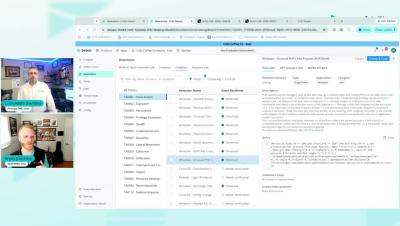
It's a Critical CVE, Now What?

Bryan Peace Leon Adato break down what exactly security-minded IT folks - whether they work in SRE, dev, networking, or more esoteric disciplines - should do when a new, critical, apocalyptic vulnerability is announced. They walk you step by step through research, analysis, and how to protect your company if a patch isn't out yet. Along the way they muse about the nature of the industry, the sudden spike in CVEs, and where to find the best hard cidr to take the edge off.

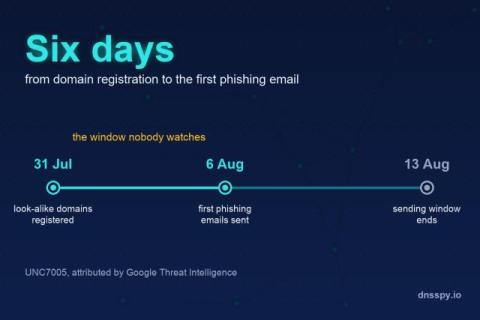
Six Days: What UNC7005 Shows About the Gap Between Domain Registration and Attack

On 20 August, Google Threat Intelligence published an analysis of a phishing cluster it tracks as UNC7005. Google assesses with moderate confidence that the cluster is connected to ICE RELIC, the Russian actor formerly tracked as APT29 and also known as Midnight Blizzard.

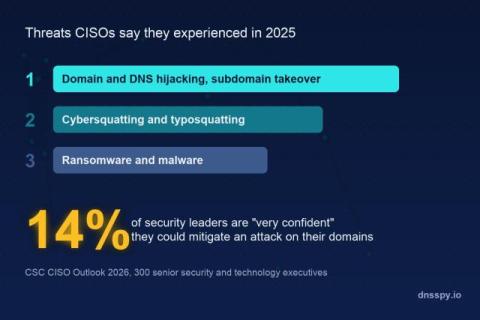
CISOs Now Rank Domain and DNS Hijacking Above Ransomware

CSC's CISO Outlook 2026 report surveyed 300 senior technology and cybersecurity executives in the first quarter of 2026, split evenly across North America, Europe and the UK, and Asia-Pacific. When asked which cyber threats they had actually experienced in 2025, not which ones worried them but which ones happened, the answer at the top of the list was domain and DNS hijacking, and subdomain takeover. Ahead of ransomware. Ahead of malware.

How Does a Domain Protect Critical IT Infrastructures?

A digital address routes traffic and anchors trust. The domain is far more than a convenient label that users type into a browser, since it carries out essential functions that keep critical systems connected, authenticated, and protected from harm. For organisations running mission-critical operations, it functions as a gatekeeper that determines whether legitimate users reach a service and whether attackers are turned away at the door.

CA distrust wargame: moving every certificate in 10 minutes

Last week, dozens of schools found out their certificate authority was being distrusted and they needed to replace all of their certificates in a few days. We wanted to know how we’d handle it if our own CA went away, and how long it would take. So we tried it with one of our other products. It has 6 certificates from Let’s Encrypt, deploying to 18 targets across Windows IIS, Linux nginx, Elasticsearch, and a mail server. Then we wargamed it: “Let’s Encrypt is being distrusted.

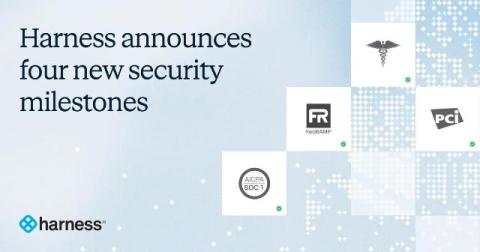
Announcing SOC 1, FedRAMP 20x Class A, PCI, and HIPAA Milestones At Harness

Explore Harness' latest compliance milestones: SOC 1, FedRAMP 20x Class A, PCI DSS, and HIPAA assessments across its platform and runtime security. Harness announced four compliance milestones: its first SOC 1 audit, FedRAMP 20x Class A certification, and first PCI DSS and HIPAA Security Rule assessments. SOC 1 and FedRAMP 20x Class A apply to the Harness Autonomous SDLC Platform. PCI DSS and HIPAA apply to the Runtime Protection Agent.

Ship SecOps changes like software: Modernizing the SOC without breaking what works

Cribl gives security teams control over their data: what they collect, where to send it and how much to keep. The rest of the SecOps stack hasn’t kept pace. Detections, parsers and configurations spread across SIEMs, pipelines and data lakes still change by hand, so every cost cut, migration or new source turns into weeks of manual validation, and plenty of planned changes never happen at all. SecOps as Code closes that gap: every change ships like software, with testing, version control and rollback across the entire infrastructure.

Symfony's October Security Releases: Three Ways a Single Request Can Hurt You

On October 14 and 15, Symfony shipped a coordinated set of maintenance releases across every supported branch: 5.4.54, 6.4.48, 7.4.21, and 8.1.9. Between them they close three CVEs, all rated high severity, and all with the same uncomfortable shape: a single HTTP request, no authentication, no special configuration, and the PHP process either burns a CPU core or falls over.