The latest News and Information on Serverless Monitoring, Management, Development and related cloud technologies.
August 2020 marks 3 years of Dashbird and empowering serverless DevOps teams to fully understand their complex serverless infrastructures by enabling them to get full observability and insights into its performance. This birthday month, we have plenty of surprises, giveaways, and goodies in our sleeve over the next few weeks, so sign up for our newsletter to be the first one to know.
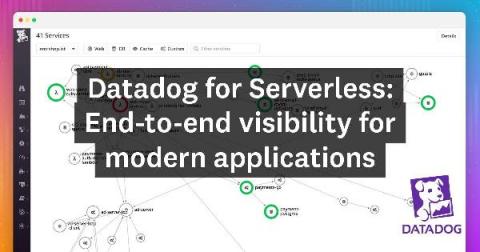
As organizations build out their serverless footprint, they might find themselves managing hundreds or thousands of individual components (e.g., Amazon S3 buckets, Amazon DynamoDB tables, AWS SQS queues) for just a single application. At the same time, performance issues can crop up at any of these points, which means that having access to detailed observability data from your serverless functions is crucial for effective troubleshooting.
To me personally, when I think programming languages I think JavaScript and while 67% of the developers out there might think the same (at first) that does not imply it’s the most efficient language to use with AWS Lambda. So without further ado, here we go.
To put it simply, serverless computing is a cloud computing execution model meaning that the cloud provider is dynamically managing the distribution of computer’s resources. What’s taking up valuable computing resources is the function execution. Both AWS and Azure charge more if you have a combination of allocated memory and the function execution elapse time which is rounded up to 100ms.
We discuss quite a bit about going serverless for SMEs and startups, however it’s often those with an already huge infrastructure, such as enterprises, that can find the move and change daunting. We see many companies from the likes of Coca-Cola to Netflix managing it but what does it look like in action? In this article, we share some best practices and insights on the serverless designs that can scale massively and represent enterprise models.
This is part of a series of articles discussing strategies to implement serverless architectural design patterns. We continue to follow this literature review. Although we use AWS serverless services to illustrate concepts, they can be applied in different cloud providers. In the previous article (Part 1) we covered the Aggregator and Data Lake patterns. In today’s article, we’ll continue in the Orchestration & Aggregation category covering the Fan-in/Fan-out and Queue-based load leveling.
Serverless has been around for a minute now but it’s safe to say that it’s still in its infancy in 2020 and definitely has a long way to go. But serverless architecture is a major step away from to dependence on humans and towards reliance on machines. Are the machines already talking over? Not literally the “Terminator” movie scenario quite yet but is this the beginning of the end of an era in the world as we know it?