Operations | Monitoring | ITSM | DevOps | Cloud

The Easy Guide to Adding COVID-19 Context to Any Process

Recently, my colleagues Ryan Kovar and Lily Lee created TA-covidIOCs, which is a Splunk TA designed for ingesting IOCs related to COVID-19. Per usual, I immediately saw this as an opportunity to hitch a ride on their coattails and benefit from their hard work. The product of this effort is a Splunk Phantom playbook uncreativly titled, "COVID-19 Indicator Check." The playbook is a simple, self-contained set of actions that takes MD5 file hashes, IPs, domains, and URLs as input.
Between Two Alerts: Phishing Emails - Don't Get Reeled In!

Potential attackers are really good at what they do. Security analysts see this firsthand with the amount of phishing emails their organizations see daily. A newly released State of the Phish report reveals that nearly 90% of organizations dealt with business email compromise (BEC) attacks in 2019. End users reported 9.2 million suspicious phishing emails globally for the year.

Splunk Phantom

If you work on a security team, you probably deal with a complex security infrastructure, including a range of technologies from multiple sources, in addition to limited resources to defend your organization. Fortunately, there’s a better way. Splunk Phantom — your go-to SOAR solution — comes to the rescue by integrating your team, processes and tools so you can bring your best defense forward in no time flat.

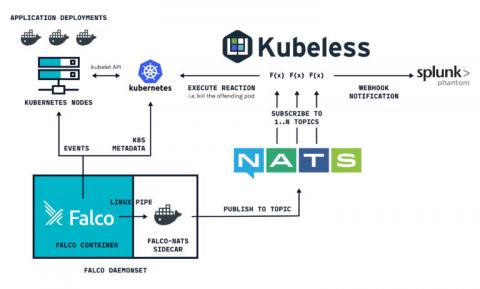
Container security orchestration with Falco and Splunk Phantom

Container security orchestration allows to define within your security policy how you are going to respond to your different container security incidents. These responses can be automated in what is called security playbooks. This way, you can define and orchestrate multiple workflows involving different software both for sourcing and responding. This is how Falco and Splunk Phantom can be integrated together to do this.