Operations | Monitoring | ITSM | DevOps | Cloud

What Is the MITRE ATT&CK Framework? A Guide for IT Ops Teams

Most IT operations teams cannot say how much of the MITRE ATT&CK framework they already cover. The framework gets explained in the language of threat hunting and red teams. The parts that belong to infrastructure work are easy to miss. And then, coverage questions get answered with a guess. The mismatch costs time on both sides. Security asks for a coverage answer that ops has no clean way to produce. Yet the controls that stop a large share of those techniques already sit with your team.

What Is a Vulnerability Scan? How It Works and What the Results Mean

How many machines in your environment are running software with a publicly documented security flaw right now? That figure comes from an asset inventory, and asset records age quickly once they are written. The gap is rarely about tooling budgets. Software inventory across a few hundred endpoints shifts every week, while the published catalogue of flaws in that software grows every single day. Manual inspection loses that race inside the first month.

What Is Network Latency? Causes, How to Measure It, and Ways to Reduce It

Slow application complaints are among the hardest tickets in IT to close. The network gets blamed first; the dashboard shows nothing wrong, and the ticket bounces between teams for a week. Network latency sits at the centre of that argument more often than any other metric. Most dashboards report latency as a single average, and that average hides the slow requests people actually notice. A path can average 30 ms and still drop a call every ten minutes.

Unified Endpoint Management: Capabilities, Rollout, and Metrics

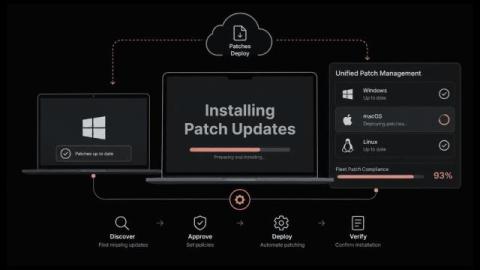
How much of your device inventory could you verify today without opening more than one console? Most IT teams can report what they purchased. Far fewer can say which of those machines are patched, encrypted, running approved software, and still checking in, because that answer spans several systems. Unified endpoint management consolidates those systems into one. Most IT teams inherit that split one platform at a time.

How SD-WAN Works and What to Monitor at Every Branch

Why does one branch report unusable voice and video every afternoon while the WAN dashboard at head office shows every site green? Most network teams have fielded that escalation. The device responds, the tunnel status reads up, and application performance is still unacceptable. SD-WAN was built for the distance between a connection that responds and an application that performs.

What Is Attack Surface Management and How Does Patching Reduce It?

Your exposure list grows faster than your team can clear it. Security adds new findings every week, and your IT team gets to a fraction of them. Everything left over is a backlog an attacker can walk straight through, and buying another scanner will not shrink it. Most attack surface management programs live inside that gap. Finding exposures got easy. Closing them did not, and a queue nobody has time to work is where the risk quietly builds.

Best Anomaly Detection Software: 9 Tools Compared on Cost and Coverage

Does the anomaly you need to catch show up in infrastructure, in security logs, in a data pipeline, or in a revenue figure? If you already know the answer, you probably learned it from an incident. A service degraded quietly, nobody got paged, and the post-mortem showed the signal had been in the data for hours. The thresholds were set correctly, and they still could not separate a busy Tuesday from a failure.

How AI Agents Are Changing ITSM Faster Than We Think | Motadata Webinar

AI is transforming ITSM beyond co-pilots with autonomous AI agents that can understand, decide, and act. In this webinar, discover how AI agents are reducing manual workloads, accelerating incident resolution, improving service quality, and enabling intelligent service operations. Learn real-world use cases, key implementation strategies, and how organizations can move from reactive support to proactive, AI-driven IT service management. Watch now to explore the future of smarter, faster, and more efficient ITSM.

What Is a CBOM and Why Does It Matter?

Quantum computing is reshaping the future of cybersecurity. In this video, learn what a Cryptographic Bill of Materials (CBOM) is, why it matters for post-quantum security, and how it helps organizations identify vulnerable cryptography, prioritize migration, and improve cryptographic visibility. Perfect for security professionals, DevSecOps teams, IT leaders, and compliance teams preparing for the quantum era.

10 Best IT Operations Management Tools (ITOM) Compared for 2026

No IT team sets out to run ten monitoring tools. It happens one purchase at a time. You add a network monitor after one outage, a server monitoring tool after the next, then a log analyzer, then an APM product when the app team gets tired of guessing. Then something breaks, and every one of those tools has an opinion. Each fires its own alerts. None of them agrees on the cause, and the first hour of the incident goes to deciding which screen to believe.