Operations | Monitoring | ITSM | DevOps | Cloud

The Anti-Zombie, Battle-Tested Guide To AI FinOps: 10 Insights

When CloudZero’s CTO Erik Peterson joined the FinOps Weekly podcast in October 2025, he didn’t hold back. Instead of going on about the usual best practices of AI cost optimization, he posed challenges to how we approach AI spending. From “zombie AI experiments” eating your budget to why you should stop apologizing for using AI, these 10 insights from the podcast are worth considering in how we approach AI FinOps. (Watch the full podcast below and keep reading for more!)

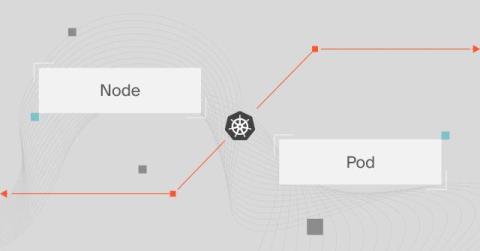
What Are Kubernetes Nodes? Everything You Need To Know

A key advantage of Kubernetes for container management is its high scalability. Kubernetes nodes are directly involved in this, and they can significantly impact your efficiency, cost-effectiveness, and service availability. This guide provides an in-depth look at Kubernetes nodes, including types of nodes and operational best practices.

What Is SolarWinds, And Should You Use It?

Downtime is brutally expensive and damaging. Enterprises can lose about $9,000 every minute systems are down, while smaller businesses lose hundreds of dollars per minute. A single outage can often cost over $100,000, and nearly a third of companies lose customers due to downtime. That’s why many organizations turn to platforms like SolarWinds to maintain reliable systems and minimize the risk of costly disruptions.

Could AI Turn Back The Clock On IT Departments?

I recently wrote about the impending SaaS crisis, driven by companies’ newfound ability to use AI to build software they used to have to buy. I predicted this phenomenon would make it even harder for SaaS vendors to drive growth, and that elite SaaS margins would fall from the mid-70s to the mid-60s as companies leaned more into their data and AI.

10+ Continuous Testing Tools To Help You Ship Quality Software

In July 2024, CrowdStrike — one of the world’s top cybersecurity companies — shipped a minor configuration update to its Windows security product. Within minutes, airlines, banks, hospitals, and retailers worldwide began crashing. The update wasn’t new code. It was a routine content file that slipped through with a bug in its safety checks. When Windows machines loaded it, the agent hit an out-of-bounds memory error and crashed. Devices blue-screened and got stuck in reboot loops.

What Is Cloud Monitoring? Everything You Need To Know

Cloud computing offers several undeniable benefits to businesses. Some of the biggest ones are agility, cost savings, data recovery, and developing new apps and services to meet changing customer needs. Despite these benefits, the cloud can be complex, demand specialized skills, and require companies to follow up-to-date cloud security best practices. Why?

Cloud Cost Allocation Requires Both Ease And Power

From the time I joined CloudZero almost two years ago, one thing was unmistakably clear: the team here had built the most powerful cost allocation engine in the FinOps industry. It was also clear that this power came with something of a tradeoff. While engineers and technical FinOps practitioners loved what our YAML-based CostFormation engine could do, the experience wasn’t always simple for non-technical people getting their hands on the product for the first time.

The Challenges Of Allocation: Why Your Cloud Cost Dashboards Fail When You Need Them Most

Your CFO just asked why cloud costs jumped 40% last quarter. You pull up your dashboards, confident in your tagging strategy, until you realize 30% of your spend is labeled ‘unallocated’. This is the moment every FinOps team dreads. It reveals a hidden complexity that even mature organizations struggle with: the challenge of accurately allocating cloud costs in a way that’s both granular enough to be actionable and trusted enough to drive decisions.

Why Cloud Managed Data Center Services Are Having A Moment

The obituary for the data center was written too soon. While the cloud dominates today’s IT headlines, traditional infrastructure hasn’t disappeared. It is evolving. Enterprises still rely on data centers for control, compliance, and reliability. However, they are increasingly needing the agility, scalability, and cost visibility that the cloud promises. Cloud managed data center services are bridging this gap.

AWS CloudFormation Pricing Breakdown (And How To Save)

Nearly every industry today uses AWS for different services. Developers, cloud architects, DevOps engineers, and IT teams all use it to provision servers, databases, and storage. However, doing this service by service and then wiring them together can get messy. That’s where AWS CloudFormation comes in to save time, enforce consistency, and lower the risk of misconfigurations. But beyond simplifying infrastructure management, one big question remains: at what cost?