Operations | Monitoring | ITSM | DevOps | Cloud

Charmed Kubeflow 1.6 Beta is out: try it today!

We are happy to announce that Charmed Kubeflow 1.6 is now available in Beta. Kubeflow has evolved into an end-to-end MLOps platform for optimised complex model training. We’re looking for data scientists, ML engineers and developers to take the Beta release for a drive and share their feedback! Read on to learn more.

Microsoft and Canonical announce native .NET availability in Ubuntu 22.04 hosts and containers

Canonical is proud to welcome the.NET development platform, one of Microsoft’s earliest contributions to open source projects, as a native experience on Ubuntu hosts and container images, starting in Ubuntu 22.04 LTS. .NET developers will be able to start their Linux journey with Ubuntu, benefiting from timely security patches and new releases. .NET 6 users and developers can now install the.NET 6 packages on Ubuntu with a simple apt install dotnet6 command.

Upgrade your desktop: Ubuntu 22.04.1 LTS is now available

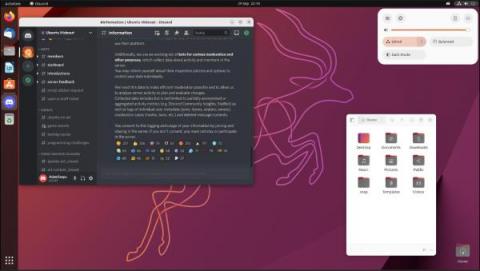
Whether you’re a first-time Linux user, experienced developer, academic researcher or enterprise administrator, Ubuntu 22.04 LTS is the best way to upgrade your creativity, productivity and downtime. Check out our new video to learn more! The release of Ubuntu 22.04.1 LTS represents the consolidation of fixes and improvements identified during the initial launch of Ubuntu 22.04 LTS and is the first major milestone in our Long Term Support (LTS) commitment to our users.

Migrating from VMware to an open-source private cloud in financial services

This is part one of a two part blog series on open source based private cloud for financial services. This blog describes the need for a cost-effective private cloud to execute a successful hybrid cloud strategy. It also shares a comparison between proprietary and open source based private cloud platforms.

Electrical and electronic vehicle architecture trends: an exploration

Vehicles are becoming more complex everyday. Customers expect safe, autonomous, connected, electrified and shared vehicles and these features are achieved via software. Although there is a clear change in focus from hardware to software, the advent of software-defined vehicles will rely heavily on optimised Electrical / Electronic (E/E) vehicle architectures. To make way for this changing paradigm, big hardware changes need to take place.

Multipass 1.10 brings new instance modification capabilities

Developers rejoice! The Multipass team has been listening to your feedback, and we are excited to announce that the latest update to Multipass contains one of our most requested features – instance modification. For those who are just discovering Multipass, it’s software designed to make working with virtual machines as painless as possible. It has an intuitive command line interface, and abstracts away the hard work of configuring, launching, modifying and destroying VMs.

Let's get confidential! Canonical Ubuntu Confidential VMs are now generally available on Microsoft Azure

On behalf of all Canonical teams, I am happy to announce the general availability of Ubuntu Confidential VMs (CVMs) on Microsoft Azure! They are part of the Microsoft Azure DCasv5/ECasv5 series, and only take a few clicks to enable and use. Ubuntu 20.04 is the first and only Linux distribution to support Confidential VMs on Azure.

Omnichannel Enablement: 4 technology success factors

The days in which a business could thrive by serving customers through brick-and-mortar stores alone are long gone. Almost all retailers now offer a variety of online and offline channels, often with some degree of integration to ensure a smooth customer journey across different touchpoints. However, even these multichannel and cross-channel strategies are increasingly falling short of modern expectations.

UX Deep Dive: Classify interactions for a more intuitive user interface

We try hard to make our products as intuitive and familiar as possible, but there will always be “advanced” options and rarely-used features. Giving users choice and control over their experience will naturally lead to features that are used less frequently or settings that only a small percentage of users will change. So how do we decide what order and prominence to give to these lesser-used features?