It's Friday afternoon, and you have mail. Apparently, a user received a 500 error when attempting to sign in. She contacted Customer Service. They didn't know what to do, so they forwarded the email to your engineering team. A close look at the email thread reveals that Customer Service received it... on Tuesday. And they sat on it until today. Hopefully, it was just this one user. You open your browser, navigate to the web application, and attempt to sign in. You also get a 500 error.
Sleuth is pleased to announce a new set of features that enable our customers to measure, compare, and drive efficiency improvements on a per-team basis!
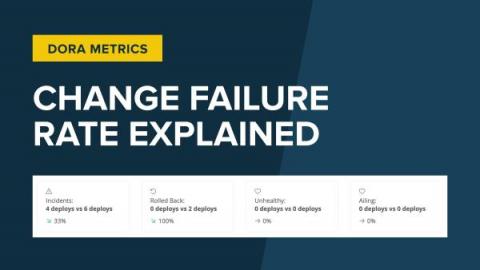
This post is the third in a series of deeper dive articles discussing DORA metrics. In previous articles, we looked at: The third metric we’ll examine, Change Failure Rate, is a lagging indicator that helps teams and organizations understand the quality of software that has been shipped, providing guidance on what the team can do to improve in the future.
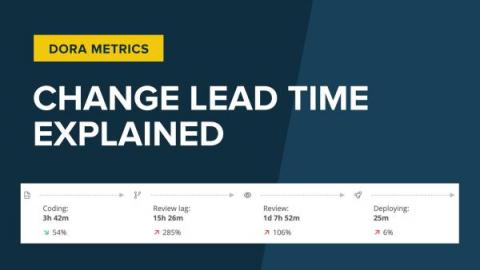
This post is the second in a series of deeper dive articles on the four DORA metrics. The first metric we looked at was Deployment Frequency, which is about how often code can get released to end users. In this second article, we’ll look at Change Lead Time, arguably the metric most familiar to developers.
We are excited to announce that Sleuth has raised $22M in Series A funding, led by Felicis, joined by Menlo Ventures with participation from CRV. We’re disrupting the world of engineering efficiency and we're hiring, come join us!
While metrics have always been fundamental to improvement in the business world, the growing prominence of DevOps in recent years has elevated their importance in the context of software development. To build a continuous improvement culture, you need a set of metrics that allows you to establish a baseline and inform where the improvement opportunities lie. Arguably the most popular of them is DORA metrics. In this post, we will focus on Deployment Frequency, one of four DORA metrics.
The larger your team grows and the faster your teams move, the harder it is for engineering leaders to find trust but verify moments, the moments where you should dig in and make sure your team's health is improving. Imagine a world where all your engineering tools are working together such that accurate and insightful trust but verify moments come to you. Imagine a world where you have the finest Sleuth in the world, working just for you.
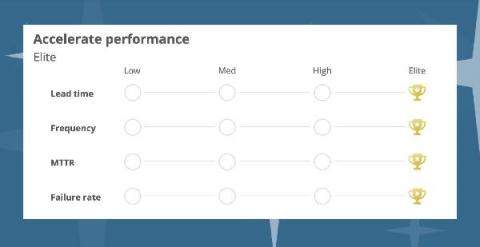
DORA metrics come from an organization called DevOps Research and Assessment. This was a team put together by Google to survey thousands of development teams across multiple industries, to try to understand what makes a high performing team different than a low performing team. What they ended up settling on are these four metrics.
In Sleuth’s continuing efforts to help our customers to deliver faster and safer, we have always put security as a top-level business priority. Security and privacy of our customers’ data is always in the forefront of our design, development, and deployment concerns. We understand the level of trust our customers put in us when they connect key systems together with Sleuth.