Operations | Monitoring | ITSM | DevOps | Cloud

Essential KPIs for Software Development: Measure Success Effectively

In almost all industries, a standard set of KPIs helps to guide teams on whether they are doing the right things in the right ways, with the right outcomes. In software development, this has evolved significantly with industry-standard frameworks like DORA metrics (DevOps Research and Assessment), which have been validated across thousands of organizations worldwide. Some development frameworks, such as Agile, have some KPIs baked directly into them.

Peeking Under the Hood with Claude Code

Claude is one of the go-to AI-native code editors for developers. Because it’s a simple chatbot interface housed inside a familiar CLI, it provides a pretty smooth path between traditional IDEs and agentic AI. But what’s actually happening behind the scenes when you ask it to write code, generate a test, or debug an issue? Who and what is it talking to behind the scenes? Can I prevent data leakage or do I need to add another layer to my tin foil hat?

Top 5 WireMock Alternatives Best Practices

WireMock is a popular open source tool for simulating APIs in testing environments through the wiremock server in the wiremock cloud. It allows developers to stub HTTP responses, match requests by URL, headers, and body content, record and play back API interactions, and add configurable delays and errors. WireMock is known for its broad adoption and active community, which contribute to its reliability and ongoing updates.

AI Prediction for 2026

Every technology cycle comes with hype, backlash, and eventually… utility. AI is shaping up to be no different. As we head into 2026, the conversation is already shifting from “AI will replace everything” to “why isn’t this paying off yet?” This shift is heavily influenced by evolving market trends, as businesses and technologists respond to changes in customer behavior, operational patterns, and broader market conditions that shape expectations around AI.

How to Test Your React Frontend When the Backend Is Offline

Picture this: You’ve spent hours perfecting your React component. The animations are smooth, the responsive design works flawlessly, and you’re ready to test the user flow. You click “Submit” and… nothing happens. Or worse, you get a cryptic CORS error. The problem? Your backend isn’t running. Again.

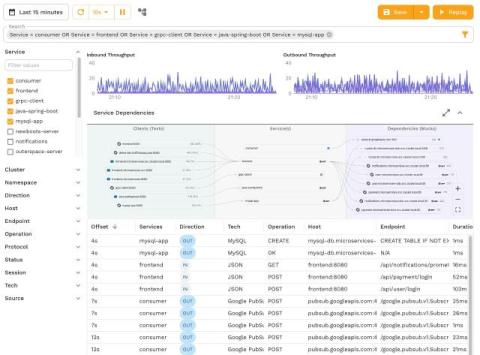
What I Learned From Building an eBPF-Based Traffic Capture Application

I just finished building Speedscale’s eBPF-based component to capture and analyze network traffic in a Kubernetes cluster, and it forced me to confront some uncomfortable truths about observability. While there were certainly some challenges along the way, particularly in dealing with Go applications, the approach was relatively straightforward.

Ephemeral Environment Testing: Do you need it?

Traditional testing methods often delay the software development lifecycle, as we have grown used to these outdated processes without considering alternatives. Ephemeral environments introduce a more efficient solution. They allow for the quick creation and dismantling of isolated testing environments. These isolated environments approach leads to faster and more productive development cycles while still delivering high-quality software to users.

Shopify Outage 2025: Rise of the Commerce Kaiju

It was a normal day in the land of eCommerce. Birds were singing, dashboards were loading, and merchants everywhere felt cautiously optimistic. Then the ground trembled. A tiny glitch. A flicker. A warning log no one read. And suddenly— BOOM! Shopify burst out of the digital ocean like a gigantic scaly beast that woke up on the wrong side of the server rack. Checkouts froze mid-purchase. Product pages stopped producting. Merchants stared blankly at blank screens. The Commerce Kaiju had arrived.

KubeCon Retrospective: Platform Engineering Needs to Do More Testing

Every year, KubeCon offers a candid look at where the cloud-native community stands — the tools gaining traction, the pain points teams share, and the big gaps still holding organizations back. After a week of deep conversations, session hopping, and talking to dozens of platform teams, one theme became impossible to ignore: Platform engineering still isn’t doing enough testing. And even more surprising: many teams don’t think testing is their responsibility.