Operations | Monitoring | ITSM | DevOps | Cloud

Logging for public sector: How to make the most of your mission-critical data

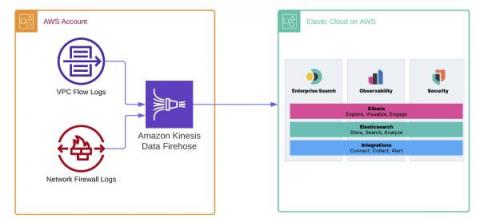
With governments doubling down on logging compliance, many public sector organizations have been focusing on optimizing their log management, especially to ensure they retain logs for required periods of time. Logs — though seemingly straightforward — are the backbone of many mission-based use cases and therefore have the potential to accelerate mission success when centrally organized and leveraged strategically. In public sector, logs are instrumental in.

Root cause analysis with logs: Elastic Observability's AIOps Labs

In the previous blog in our root cause analysis with logs series, we explored how to analyze logs in Elastic Observability with Elastic’s anomaly detection and log categorization capabilities. Elastic’s platform enables you to get started on machine learning (ML) quickly. You don’t need to have a data science team or design a system architecture. Additionally, there’s no need to move data to a third-party framework for model training.

How to add support for more languages in your Elastic Enterprise Search engines

Engines in Elastic App Search enable you to index documents and provide out-of-the-box, tunable search capabilities. By default, engines support a predefined list of languages. If your language is not on that list, this blog explains how you can add support for additional languages. We’ll do this by creating an App Search engine that has analyzers set up for that language.

Monitoring service performance: An overview of SLA calculation for Elastic Observability

Elastic Stack provides many valuable insights for different users. Developers are interested in low-level metrics and debugging information. SREs are interested in seeing everything at once and identifying where the root cause is. Managers want reports that tell them how good service performance is and if the service level agreement (SLA) is met. In this post, we’ll focus on the service perspective and provide an overview of calculating an SLA.

Elastic Common Schema and OpenTelemetry - A path to better observability and security with no vendor lock-in

At KubeCon Europe, it was announced that Elastic Common Schema (ECS) has been accepted by OpenTelemetry (OTel) as a contribution to the project. The goal is to achieve convergence of ECS and OpenTelemetry’s Semantic Conventions (SemConv) into a single open schema that is maintained by OpenTelemetry. This FAQ details Elastic’s contribution of Elastic Common Schema to OpenTelemetry, how it will help drive the industry to a common schema, and its impact on observability and security.

Monitor OpenAI API and GPT models with OpenTelemetry and Elastic

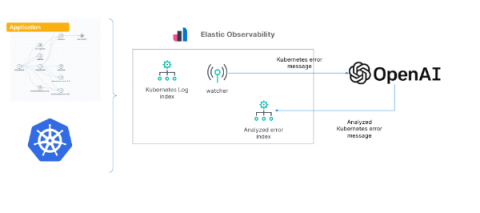
ChatGPT is so hot right now, it broke the internet. As an avid user of ChatGPT and a developer of ChatGPT applications, I am incredibly excited by the possibilities of this technology. What I see happening is that there will be exponential growth of ChatGPT-based solutions, and people are going to need to monitor those solutions.

How to monitor Kafka and Confluent Cloud with Elastic Observability

The blog will take you through best practices to observe Kafka-based solutions implemented on Confluent Cloud with Elastic Observability. (To monitor Kafka brokers that are not in Confluent Cloud, I recommend checking out this blog.) We will instrument Kafka applications with Elastic APM, use the Confluent Cloud metrics endpoint to get data about brokers, and pull it all together with a unified Kafka and Confluent Cloud monitoring dashboard in Elastic Observability.

Elastic Observability 8.7: Enhanced observability for synthetic monitoring, serverless functions, and Kubernetes

Elastic Observability 8.7 introduces new capabilities that drive efficiency into the management and use of synthetic monitoring and expand visibility into serverless applications and Kubernetes deployments. These new features allow customers to: Observability 8.7 is available now on Elastic Cloud — the only hosted Elasticsearch offering to include all of the new features in this latest release.

Elastic Enterprise Search 8.7: New connectors, extraction rules for web crawler, and search analytics client beta

Elastic Enterprise Search 8.7 is packed with features designed to improve content ingestion and search experiences. With this release, the MySQL connector adds advanced filtering capabilities, allowing you to filter and ingest large volumes of data from MySQL databases more efficiently.

Elastic Observability: Built for open technologies like Kubernetes, OpenTelemetry, Prometheus, Istio, and more

As an operations engineer (SRE, IT Operations, DevOps), managing technology and data sprawl is an ongoing challenge. Cloud Native Computing Foundation (CNCF) projects are helping minimize sprawl and standardize technology and data, from Kubernetes, OpenTelemetry, Prometheus, Istio, and more. Kubernetes and OpenTelemetry are becoming the de facto standard for deploying and monitoring a cloud native application.