Operations | Monitoring | ITSM | DevOps | Cloud

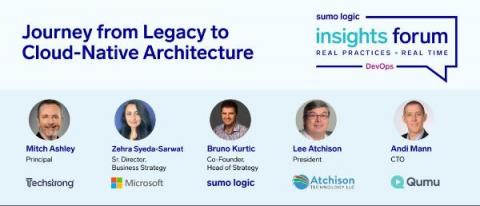
Learn about the meaning and value of cloud-native from experts at Atchison Technology, Qumu, Microsoft, and Techstrong Group

In the past decade, we've seen explosive growth in the adoption of the cloud-based infrastructure model. IT organizations are increasingly choosing to reduce their up-front investments in IT infrastructure by deploying their applications into cloud environments. These environments offer on-demand availability of data storage and computing power that organizations need to handle high volumes of data and growing demand for application access and services.

Too many tools? Best practices for planning and implementing a successful IT tool consolidation strategy

IT tool consolidation is the ongoing and combined effort of all members of an IT organization to ensure that employees (only) use IT hardware, software and services that create and demonstrate explicit value for stakeholders in the business. The best metaphor for tool consolidation is in my kitchen, where common sense principles around value creation provide useful guidelines for any consolidation process.

New AWS services? No problem! How Sumo Logic is evolving to meet your AWS observability needs

Every year, AWS re:Invent demonstrates the pivotal role that AWS plays as companies build their modern applications. Investing in a growing portfolio of AWS services can be key to a business’s ability to compete. But this often means additional complexity: more services, across more regions and accounts. Organizations need a way to ensure their applications running on AWS services are reliable and secure. Enter Sumo Logic.

Prepare your IT systems for Black Friday with best practices and strategies from Ulta Beauty

For retail and e-commerce companies, exponential traffic spikes are a holiday season tradition that often peaks on Black Friday. And Ulta Beauty knows this all too well. As the largest beauty retailer in the US today, operating 1,300 stores nationwide, Ulta experienced the growing pains of its on-premises IT environment: slow rollouts, tedious infrastructure management, and a lack of visibility into critical systems. Sound familiar?

How to design a microservices architecture with Docker containers

Application development trends guide industries (tech and non-tech alike) toward a more cloud-native and distributed model with digital-first strategies. Many organizations are adopting new technologies and distributed workflows. Software development pipelines enable teams to collaborate efficiently and maintain productivity. However, organizations that were early to embrace modern application development strategies and tools, including containerization and multi-cloud environments.

Sumo Logic's investment in OTel

When teams collect data without full observability of what others on the team can see, it becomes clear that no one’s picture is truly accurate. In this picture, all of the people are wearing blindfolds and feeling around to see what is in front of them. One thinks this creature is a spear, another thinks it is a tree trunk, and another a rope. As long as they cannot observe what the others can, there is poor data fidelity.

How to build your DevOps team with Agile culture

DevOps is the modern convergence of people, processes and tools to create a continuous software delivery stream. Much like the code it produces, the concept of DevOps itself is continuously adapting to encompass new ideas, methods, and technologies. So what can we expect from the DevOps cultural shift in the future? The delivery stream of yesterday was a segmented process, often separating key teams and concepts into silos where people focused on their individual tasks.

10 things you should know about using AWS S3

Almost everyone who’s used Amazon Web Services (AWS) has used Amazon simple storage service (S3). In the decade since it was first released, S3 storage has become essential to thousands of companies for file storage. While using S3 in simple ways is easy, at a larger scale it involves a lot of subtleties and potentially costly mistakes, especially when your data or team are scaling up. Here are the most important things about AWS S3 that will help you avoid costly mistakes.

How to decide on self-hosted vs managed Apache Airflow

Apache Airflow is an open-source orchestration platform that enables the development, scheduling and monitoring of tasks using directed acyclic graphs (DAGs). Here at Sumo, our team has been using this technology for several years to manage various jobs relating to our organization’s Global Intelligence, Global Confidence, and other data science initiatives. We self-host the tool through Kubernetes.

How to track AWS costs with the AWS Cost Explorer app for Sumo Logic

From Sumo Logic’s inception over a decade ago, we made a strategic bet to go all in with Amazon Web Service (AWS). Today, many of our customers rely on Sumo Logic to gain unified visibility into their growing number of AWS services, cut troubleshooting time and unlock comprehensive root cause analysis for complete issue resolution.