Operations | Monitoring | ITSM | DevOps | Cloud

A complete guide to LLM observability with OpenTelemetry and Grafana Cloud

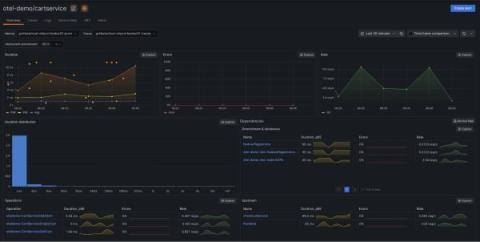
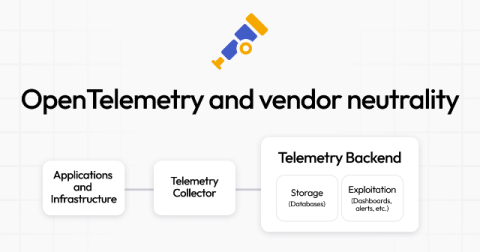
In the fast-paced world of technology, change is constant — and nowhere is that more evident today than in the flood of new features and advancements involving large language models (LLMs). They power various applications, from chat bots to advanced copilots. And as these LLMs and applications become more sophisticated, it will be vital that they work well and reliably. This is where observability, with the help of OpenTelemetry (using OpenLIT), plays an essential role.

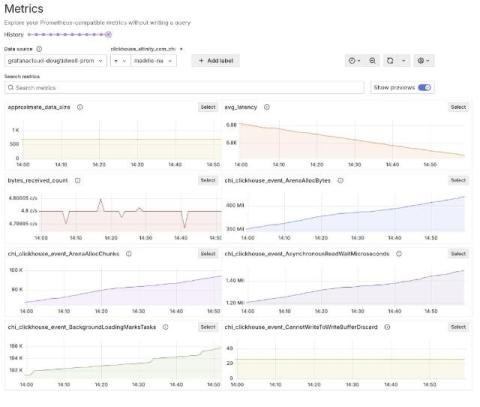
Get insights from logs without writing a query: Explore Logs is in Public Preview

Whether it’s 3 in the morning and you’re trying to resolve an outage, or you’re testing a new feature and you need to resolve a recurring issue so you can move on to your next task: time is of the essence. Wouldn’t it be great if your observability tooling could direct you to your “aha” moment, without you needing to fumble with writing a query?

Grafana Cloud updates: Kubernetes Monitoring enhancements, browser tests in Grafana Cloud k6, and more

We consistently roll out helpful updates and fun features in Grafana Cloud, our fully managed observability platform powered by the open source Grafana LGTM Stack (Loki for logs, Grafana for visualization, Tempo for traces, and Mimir for metrics). In case you missed it, here’s a roundup of the latest and greatest updates for Grafana Cloud this month. You can also read about all the features we add to Grafana Cloud in our What’s New in Grafana Cloud documentation.

Performance testing with Grafana k6 and GitHub Actions

By running performance tests continuously and automatically, you can identify and correct performance regressions as they occur. One way to do this is by integrating performance testing into your development process. In this step-by-step post, we explore how to do just that, using Grafana k6 and GitHub Actions. k6 is an open source load testing tool to test the performance of APIs, microservices, and websites.

Observing exchange rates: How to keep tabs on currencies during the summer travel season

It’s summertime in the Northern Hemisphere, and for many people that means it’s also travel season. But before you depart for your dream holiday, don’t forget the essentials: passport, suitcase, and … Grafana? That’s right. If you’re headed to a different country, odds are you’ll use a different currency when you get there. And you can use Grafana to track changes in the exchange rates so you can get the most bang for your buck.

Upgrade with confidence: Strategies for updating your self-hosted Grafana instance

At Grafana Labs we believe in shipping features early and often, and in recent years we’ve doubled down on that philosophy. We no longer wait for the yearly major release to give you access to the next big thing. Instead, we regularly make new features, bug fixes, and security patches available to our self-managing users (Grafana OSS and Grafana Enterprise) throughout the year.

CI/CD observability: A rich, new opportunity for OpenTelemetry

Continuous integration and continuous deployment (CI/CD) are the backbone of modern software delivery, but there’s still limited visibility into their processes. Here’s how that’s changing with OpenTelemetry (OTel), and why those changes are so exciting.

How to customize your Loki deployment with Ansible

Michal Vaško is a DevOps engineer at cloudWerkstatt, with a passion for open source technology and a deep love for observability. While operations or platform teams have long relied on visibility into metrics to react swiftly, the idea of doing the same thing with logs was once just a dream. Thankfully, Grafana Loki has revolutionized the logging stack, giving you the same level of visibility with logs that you get with metrics.

Getting started with Grafana: best practices to design your first dashboard

At its core, observability is about helping humans understand and optimize complex systems. It enables engineering teams to ask questions on the fly, and to learn not only when something goes wrong but why. Observability also allows organizations to proactively identify and address performance issues — before their end users even have a chance to notice.

Identify anomalies, outlier detection, forecasting: How Grafana Cloud uses AI/ML to make observability easier

At Grafana Labs, our No. 1 approach when building AI/ML tools is to enable humans (a.k.a. all of us!) to understand complex systems. In other words, we want to make observability still human, but less complicated. (Our second use case? Making social media more fun.) We believe that AI/ML tools in observability should work towards minimizing toil and the need for everyone in your organization to have the same deep domain knowledge about your increasingly complex stack.