Operations | Monitoring | ITSM | DevOps | Cloud

Why Automotive Manufacturers Are Augmenting Data Historians, Not Replacing Them

Summary Automotive manufacturers face rising costs and scaling limits with per-tag-priced data historians as sensor counts and sampling rates grow. Instead of rip-and-replace, manufacturers are augmenting traditional data historians by routing new telemetry to InfluxDB (via Telegraf or Litmus or consolidating siloed historians, while the historian continues handling SCADA and regulatory data. Table of Contents.

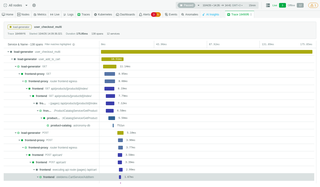
Distributed Tracing In Netdata: OpenTelemetry Traces

Back in 2020, when we laid out where Netdata was going, the plan listed anomaly detection, log collection and “application traces collection”. The first two shipped years ago. Traces took longer, because we wanted them to work the way the rest of Netdata works: collected and stored on your own nodes, with no separate backend to stand up. Distributed tracing is now available in Netdata.

The Year-2 Price Cliff: What Your Observability Stack Really Costs Over 3 Years

I’m not the one whose phone lights up at 3 a.m. when production breaks. But I’ve spent years working alongside the engineers who are, and I’ve noticed that observability migrations happen for two reasons. Either engineering needed one, or, far more often, a quote landed that looked too good to refuse. The engineers rarely regret the first kind. The second kind they tell me about in year two, usually with a renewal notice in hand.

FastAPI 0.142 Turns On OpenTelemetry by Default. Here's What It Records.

FastAPI 0.142.0 ships with OpenTelemetry built in. Install fastapi, set one environment variable, and every request produces a trace, metrics, and error logs. No middleware, no instrumentation package, no code. That’s a big change for a framework most Python teams instrument by hand. It’s also easy to misread. The defaults record more than some teams expect in one place, and less than others assume in another. Here’s what you actually get.

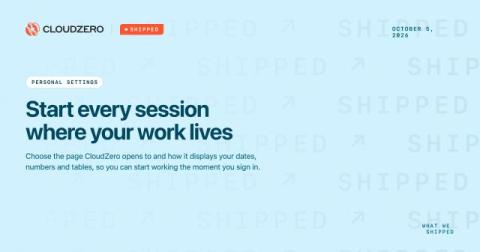
Shipped: Start every session where your work lives

Most people who use CloudZero spend their time in one or two places. For some it’s AI Signals, and for others it’s Optimize or Anomalies. If Explorer isn’t one of those places, every sign-in starts with a click to get where you need to be. Dates and numbers are another friction. A date like 04/07 means April 7 in the US and July 4 in much of Europe. When the platform shows a format your team doesn’t use, you end up having to convert each value before you can work with it.