The two key pillars of building reliable applications are: testing and monitoring. With testing, you can verify that each pull request works before it’s merged and deployed to production. Just testing isn’t enough, though. You also need to make sure that the application continues to work on production. Database rollovers, third-party outages, and unexpected spikes in traffic can all cause issues that need to be detected.
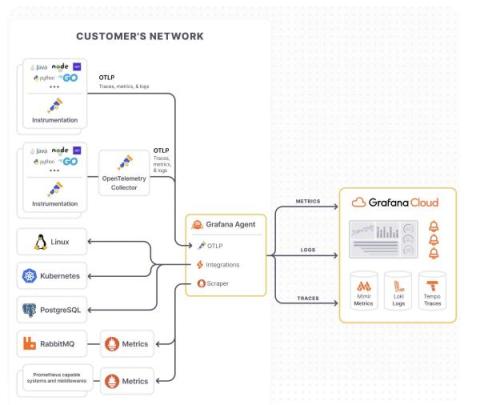
If you’ve landed on this blog, you’re likely either considering starting your OpenTelemetry journey or you are well on your way. As OpenTelemetry adoption has grown, not only within the observability community but also internally at Grafana Labs and among our users, we frequently get requests around how to best implement an OpenTelemetry strategy.
Rollbar is acclaimed as the top error monitoring tool - with 4.5 out of 5 stars on both Capterra and G2 - amongst a competitive field. That said, we recognize there are alternatives some people consider when also looking at us. Here is our perspective on what these other tools are for, and when to choose Rollbar instead.
Cloud-based database providers often provide great observability out of the box. But, what if you’re developing a tricky feature locally and need more details about what your local Clickhouse is doing? There are many options, but if you’re a numbers and graphs person like me, you’ll want to be able to view the inner workings of Clickhouse in something like Grafana.
This is the ninth part of our 12-day Advent of Monitoring series. In this series, Checkly's engineers will share practical monitoring tips from their own experience. As a Checkly user, you’ve always had access to our two core check types: API and browser checks. API Checks are much cheaper, and therefore only run a curl-like request against the endpoint of your choice.
Poised to redefine the landscape of digital communication stands the groundbreaking achievement that is IPv6, the sixth generation of the Internet Protocol. The evolution from IPv4 to IPv6 marks a pivotal shift in internet technology, driven by the increasing scarcity of IPv4 addresses and the expanding scale of the global network.