Operations | Monitoring | ITSM | DevOps | Cloud

Sentry for SvelteKit

We’re happy to announce that the Sentry SvelteKit SDK is now generally available and ready to help you monitor your SvelteKit application. Last year, we entered the Svelte ecosystem by creating an SDK for Svelte, which provides support for Svelte single page apps. We knew that SvelteKit was already quite far along back then and we kept a close eye on its development. We also received a lot of requests from the community to support SvelteKit.
PagerDuty Launches New Innovations to Reduce Tool Sprawl and Optimize Operations

The number of tools used by distributed teams to manage incidents has multiplied over the years, leading to a valley of tool sprawl. Throw in manual processes and you’ve got too much toil and multiple points of failure. Maintaining disparate tools and systems isn’t just unwieldy, it’s expensive. Our latest capabilities add to the PagerDuty Operations Cloud to make it easier than ever for teams to consolidate their incident management stack.

A Place for Everything and Everything in Its Place

With Cribl Stream, our customers are experiencing choice and control over their data that would have been a pipe dream (or maybe I should say a pipeline dream) before. The ability to get the right data to the right destination in the right format is extremely powerful. Stream can optimize the data being sent to expensive destinations; you can remove unnecessary or redundant fields, drop unnecessary events, or even pull valuable metrics from verbose logs. Optimizing your data has a few benefits.

What is Observability?

“Observability” seems to be the buzzword du jour in IT these days but what does it actually mean, and how is it any different from plain, old monitoring? In simple terms, observability is the ability to understand how a system is performing and how it is behaving from the data that system generates. It is not just about monitoring metrics or collecting logs, but also understanding the context of those metrics and logs, and how they relate to the overall health of the system.

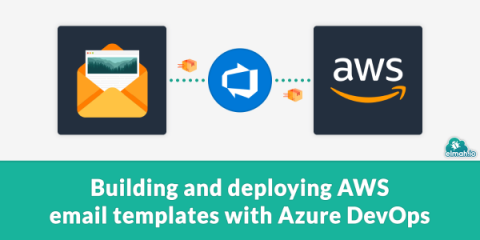
Building and deploying AWS email templates with Azure DevOps

This is the third and final post (for now) in the series about developing email templates with MJML and deploying them to AWS. In the previous post, we developed a Gulp script to automatically build HTML from the MJML file and insert it in a template file for AWS. In this post, we will set up an automated build and deployment of the email template using Azure DevOps. A quick recap.

Continuous Delivery Pipeline for Kubernetes Using Spinnaker

Kubernetes is now the de-facto standard for container orchestration. With more and more organizations adopting Kubernetes, it is essential that we get our fundamental ops-infra in place before any migration. In this post, we will learn about leveraging Jenkins and Spinnaker to roll out new versions of your application across different Kubernetes clusters.

How Uncaught Crashes Can Damage Your Application's Reputation, Revenue, and more

At BugSplat, we have a unique view of how uncaught crashes can impact individual teams (and entire companies) through our work building tools to find and fix bugs in live applications. We've seen firsthand the difference it can make when teams have a workflow for reporting every defect that makes it into production and when they don't.

Feature Spotlight: Kubernetes Dependency Maps and Real-Time Topology

This blog dives into detail about one of StackState’s most unique and powerful features, Kubernetes dependency maps. Dependency maps are Kubernetes service and infrastructure maps, enhanced with real-time topology, that show dependencies between all components at any moment in time.

What Is Workload Automation Observability?

As workload automation environments become more complex and job volumes increase, the need for true observability is becoming an increasingly essential and critical component for optimized automated business process delivery. Most organizations run several automation engines from different vendors in both distributed and mainframe environments, and in the cloud. Sometimes these automation engines operate in a silo, sometimes they have dependencies with each other.

What is Remote Network Monitoring: Network Optimization In The Remote Work Era

Welcome to the digital realm, where networks thrive and connectivity reigns supreme! In this age of remote work and virtual collaboration, our networks have become the unsung heroes of productivity. But have you ever wondered how they seamlessly navigate the vast expanse of cyberspace while ensuring optimal performance? Enter the enigmatic world of remote network monitoring! In this blog post, we're embarking on an electrifying adventure to demystify the magic behind remote network monitoring.