Operations | Monitoring | ITSM | DevOps | Cloud

The latest News and Information on Log Management, Log Analytics and related technologies.

The Benefits of Structuring Logs in a Standardized Format

Image via Pixabay As any developer or IT professional will tell you, when systems experience issues, logs are often invaluable. When implemented and leveraged effectively, the data produced by logging can assist DevOps teams in more quickly identifying occurrences of problems within a system. Moreover, they can prove helpful in enabling incident responders to isolate the root cause of the problem efficiently. With that being the case, maximizing the value of log data is vital.

Log Management 101: Log Sources to Monitor

Log management software gives the primary diagnostic data in your applications’ development, deployment, and maintenance. However, choosing the log sources to log and monitor could often be a daunting task. The primary cause of concern in monitoring all sources is the high price tag that many SIEM tools in the market charge based on the number of users and sources ingesting logs. At observIQ, we offer unlimited users and sources.

Introduction to Custom Metrics in Java with Logz.io RemoteWrite SDK

We just announced the creation of a new RemoteWrite SDK to support custom metrics from applications using several different languages. This tutorial will give a quick rundown of how to use the Java SDK. This SDK – like the others – is completely free and open source, and is meant to apply to any output destination, not just Logz.io.

Announcing LogDNA Agent 3.3 GA: Improved Performance for Linux Support

We’re excited to announce the general availability of the LogDNA Agent 3.3, which introduces Linux and ARM64 support to our Rust Agent. This new support in our Rust Agent provides improved performance and enables a few features previously only available for our Kubernetes customers, such as various configurations within the Agent and the ability to run as a non-root user. Additionally, we have added in Prometheus Metrics that help provide insights into your Agent.

Discovering the Differences Between Log Observability and Monitoring

Log observability and monitoring are terms often used interchangeably, but really they describe two approaches to solving and understanding different things. Observability refers to the ability to understand the state of a complex system (or series of systems) without needing to make any changes or deploy new code.

Why your log management software may not give you the real Dashboard experience

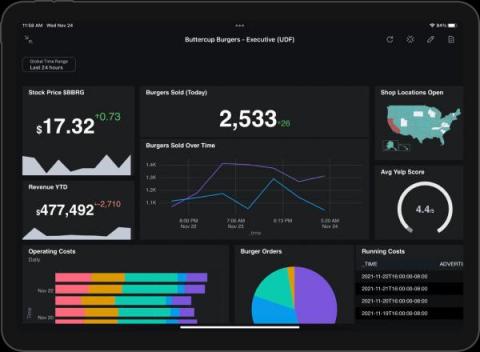
Visualizing log data is one of the biggest perks of using good log management software. Data is many businesses’ most critical asset. But, without proper use, a business’ data becomes just an artifact and no longer an asset. Visualization and analysis are the end goals of collating log data from their sources. The need for visualization arises from the fact that we intuitively process visual information faster than a random jumble of numbers and letters.

The Future of Sumo Logic Observability

I have always found data collection to be a fascinating area of work at Sumo Logic. Collecting data is a critical first step for all the solutions we develop for our customers. After all, to observe the health and performance of your applications, you must first collect all relevant data. It's also an area that has seen some significant activities by the open-source community over the years, which is completely changing the landscape of observability as we know it.

A CISO's Guide to Log Management for Cybersecurity

In today’s highly interconnected worlds, CISOs face a dual challenge: protecting data and reporting to the Board of Directors. Log management has long been a tool in the CISO’s back pocket, helping gain insight into potential security issues. However, the rise of cloud-based infrastructures changes this, making log management increasingly difficult.

IoT Data With LogDNA

Consider the following question: Why do most teams face pressure to rethink traditional logging and observability approaches? Asking this question to most engineers would likely result in answers centered on the challenges posed by microservices apps. Because microservices are more complex than monoliths and involve more moving parts, they require more sophisticated, granular log collection, correlation, and analysis.