Operations | Monitoring | ITSM | DevOps | Cloud

Observability for Azure Virtual Desktop with SquaredUp

Managing Azure Virtual Desktop doesn’t have to mean jumping between portal blades, logs, and metrics trying to piece together what’s happening. In this webinar, you’ll learn how to design and implement a single, operational observability dashboard for Azure Virtual Desktop (AVD) using SquaredUp Cloud — transforming fragmented telemetry into clear, actionable insight. Whether you're responsible for performance, user experience, or operational stability, this session will give you a structured, repeatable framework for monitoring your AVD estate with confidence.

Datadog Incident Response: One platform from alert to resolution

When incidents strike, speed and clarity are critical. Datadog Incident Response brings the full incident lifecycle into one platform so teams can move from detection to resolution with confidence. Operate from a single, unified view of your systems, coordinate across the tools your teams already use, and leverage AI that analyzes incidents in real time to surface context, guide decisions, and accelerate resolution.

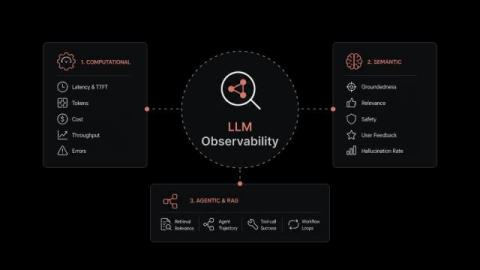
Top 12 AI and LLM Observability Tools in 2026 Compared: Open-Source and Paid

Artificial intelligence has moved far beyond experimentation. In 2026, AI systems are embedded into customer support workflows, clinical decision support tools, fraud detection engines, and internal copilots across nearly every industry. Adoption is accelerating quickly. According to McKinsey, 23% of organizations are already scaling agentic AI systems, while another 39% are actively experimenting with them. Yet the path to reliable production AI remains uncertain.

GPU Fragmentation Is Killing AI Economics

By 2026, the GPU shortage isn’t a supply-chain hiccup anymore. It’s baked into the system. Even after pouring billions into CapEx, most enterprises still want 40% more GPU capacity than they actually have. And it’s not because they’re chasing moonshots. Technology companies are training foundation models while serving inference for millions of users on the same clusters. AI labs are juggling fine-tuning, evaluation, and real-time experimentation side by side.

What is Agentic Observability?

Agentic observability is the instrumentation and correlation needed to explain and control agent behavior across multi-step workflows. Legacy observability focuses on runtime health and service behavior. You monitor metrics like CPU usage, memory, latency, and error rates to confirm that applications and infrastructure are functioning as expected. When a workflow degrades, the proximate cause is often a crash, timeout, permission error, or resource constraint.

How Autonomous Are Your IT Operations, Really?

This post introduces a six-level maturity model that defines what true autonomy looks like in IT operations, from basic AI chat interfaces to fully coordinated agent ecosystems. ITOps teams have more automation tooling than ever, and yet incident response still depends heavily on human judgment to hold it together. Alerts fire, engineers dig through dashboards, context gets assembled by hand, and someone at the end of the workflow makes the final call.

Harness AI + MCP server: A Single Prompt to Accelerate the Software Development Lifecycle

Pipeline Creation: Using a single prompt in the IDE, a CI/CD pipeline is created and triggered via the agent connected to the Harness MCP server. Failure Diagnosis and Fix: When the pipeline fails, the agent is used to diagnose the issue (a failed dependency) and propose a fix, which is then committed, pushed, and the pipeline re-triggered to succeed. Deployment: After a successful build, the artifact is deployed into a Kubernetes cluster. Incident Response.

Why the AI market is shifting

The AI revolution is getting expensive. Ben Norris (AI Engineer at Civo) breaks down a staggering statistic: AI token usage has jumped from 9.8 trillion to 1.3 quadrillion in just under two years—a 130x increase. As businesses scale, the "closed source" premium is becoming a bottleneck. Watch as Ben explains why enterprises are turning toward democratized, open-source AI and smaller vendors like relaxAI to maintain power at a fraction of the cost.