Operations | Monitoring | ITSM | DevOps | Cloud

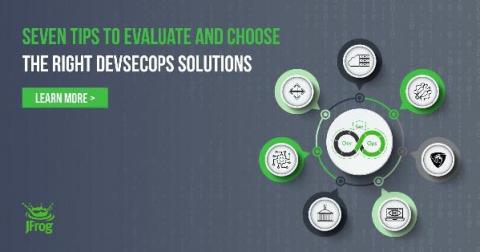
Seven Tips to Evaluate and Choose the Right DevSecOps Solutions

Demand for DevSecOps products has been growing strongly, as more companies realize the importance of integrating security into their DevOps pipelines. However, IT and DevOps pros who dive into the DevSecOps market looking for options quickly realize that the number of DevSecOps tools and frameworks is vast and confusing.

Barriers to DevSecOps Adoption

DevSecOps — or the merging of Ops and Security — has been at the center of discussion for the better part of the outgoing decade. Today, the complexity of infrastructure change, demands security and DevOps teams to work together more efficiently. But there are hurdles to adoption of DevSecOps as a methodology. Cloud-native applications often live in multiple clouds across data centers, co-location, and public clouds.

How The JFrog Platform Drives DevSecOps At Scale

With the JFrog Platform at the core of your DevSecOps tool chain, you will over achieve your deployment frequency and change lead time metrics. By integrating JFrog into your existing CI environment current skills (people) and processes are maximized, while aggregating all the commercial and open source software artifacts, dependencies and documentation for re-use across all of your development projects to drive consistency and quality of the build.

Enhancing Observability in DevSecOps

Digital transformation often accelerates innovation at the expense of creating an intelligence gap with massive amounts of unanalyzed data. This is where Continuous Intelligence comes into play. Join Sumo Logic’s Systems Engineer, Suresh Govindachetty, as he demonstrates how Continuous Intelligence helps find and solve information gaps, and how a single platform approach allows organisations to combine devs, operations, and security in ways that ease the burden for all teams across the organisation.

A New Framework for Modern Security

We are in the midst of an unprecedented convergence of events that are forcing enterprises to dramatically change how they secure their modern businesses. With the acceleration of digital transformation from COVID-19, work-from-home initiatives, the continued growth of SaaS and the increasing adoption of microservices-based applications, the modern enterprise threat landscaping is transforming rapidly.