Operations | Monitoring | ITSM | DevOps | Cloud

The Place Where Modern Operations & Technology Come Together

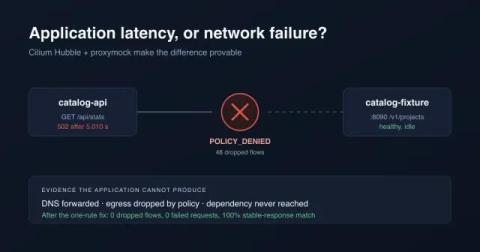
Separate Application Latency From Network Failure With Hubble
The request timed out after five seconds. The application said context deadline exceeded. The dependency was healthy, its dashboards were green, and its own latency histogram showed nothing above 30 milliseconds.


Observe Opaque Services With OpenTelemetry eBPF + proxymock
Every SRE team operates services it cannot see into: a vendor binary, an inherited legacy deployment, a container whose owning team dissolved two reorgs ago. The routes are undocumented, the dependencies are unknown, and when a request takes 130 milliseconds nobody can say whether that time is application work or a wait across a network boundary.

Diagnose Serial N+1 API Calls With Tempo + proxymock
One API request took 302 milliseconds. Nothing failed. CPU was mostly idle. The response was correct. The trace made the problem obvious: eight inventory calls, each waiting for the previous one. But the trace could not tell me why the application made eight calls, or whether changing their execution would preserve the response. It showed the shape of the wait, not the input that created it.
Sponsored Post

Flamegraphs Find It. Replay Proves It.
I made an API endpoint 13 times faster. Then I realized my first verification only checked the status, headers, and response schema. I had not checked the totals. I had made the bug faster. That is the problem with giving an AI coding agent one kind of evidence. A CPU profile can show where the application is slow, but not whether an optimization preserves behavior. A traffic replay can prove that behavior stayed stable, but not explain why the code burns CPU. This walkthrough gives the agent two independent witnesses: Together, they turn AI code verification into an experiment with two independent checks.
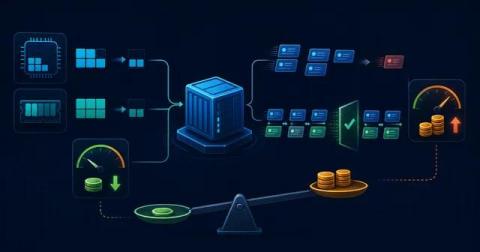
The Pod Was Cheaper. The Service Wasn't.
A smaller Kubernetes pod can lower allocation cost while completing less work. Green status codes and matching schemas can hide it. This walkthrough combines OpenCost allocation data with proxymock behavior and performance evidence. A candidate passes only when behavior and throughput hold while unit cost falls.

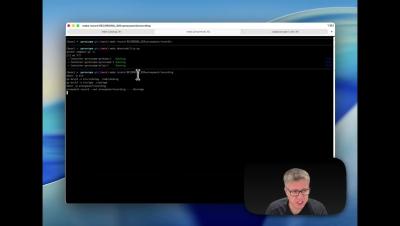
Pyroscope + Proxymock to Solve Performance Problems
This video provides a step-by-step demonstration of how to record an application's real-world traffic and generate an automated sandbox environment for debugging and testing.