Operations | Monitoring | ITSM | DevOps | Cloud

Easily test and monitor your mobile applications with Datadog Mobile Application Testing

Effective mobile application testing that meets all the requirements of modern quality assurance can be challenging. Not only do teams need to create tests that cover a range of different device types, operating system versions, and user interactions—including swipes, gestures, touches, and more—they also have to maintain the infrastructure and device fleets necessary to run these tests.

Store and analyze high-volume logs efficiently with Flex Logs

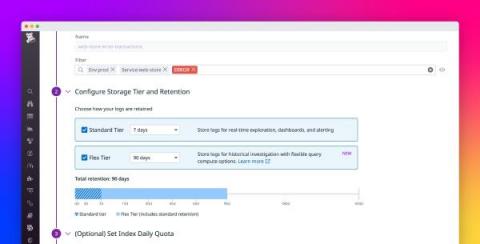
The volume of logs that organizations collect from all over their systems is growing exponentially. Sources range from distributed infrastructure to data pipelines and APIs, and different types of logs demand different treatment. As a result, logs have become increasingly difficult to manage. Organizations must reconcile conflicting needs for long-term retention, rapid access, and cost-effective storage.

DASH 2023: Guide to Datadog's newest announcements

This year at DASH, we announced new products and features that enable your teams to get complete visibility into their AI ecosystem, utilize LLM for efficient troubleshooting, take full control of petabytes of observability data, optimize cloud costs, and more. With Datadog’s new AI integrations, you can easily monitor every layer of your AI stack. And Bits AI, our new DevOps copilot, helps speed up the detection and resolution of issues across your environment.

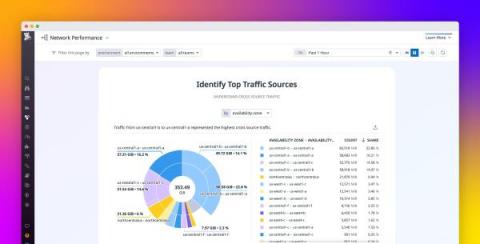
Quickstart network investigations with NPM's story-centric UX

Datadog Network Performance Monitoring (NPM) gives you visibility into all the communication that takes place between the network components in your environment, including hosts, processes, containers, clusters, zones, regions, and VPCs. As organizations scale, and as their networks grow in complexity, the massive volume of network data to be monitored can become overwhelming. Knowing precisely what network data to surface to resolve issues within these larger environments can be a challenge.

Container Security Fundamentals - Linux Namespaces (Part 3): The Network Namespace

In this video, we continue our examination of Linux namespaces by looking at some details of how the network namespace can be used to isolate a container’s view of network resources, and how this feature can be used for troubleshooting container problems.

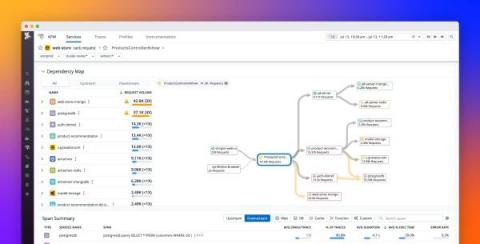
Pinpoint performance issues in downstream services with the Dependency Map Navigator

Visibility into the upstream and downstream dependencies of your services is key to maintaining a performant microservices environment. Application developers and SREs rely on this visibility to quickly trace issues back to the source, which is essential during incidents—when time is of the essence—throughout day-to-day operations, and as systems evolve and scale.

Import Backstage YAML files into Datadog to manage all your services in one place

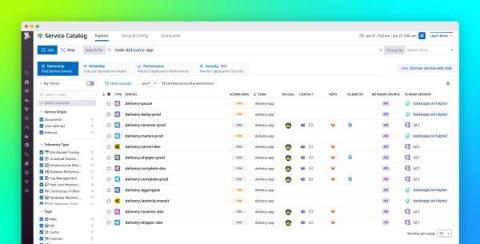
The Datadog Service Catalog centralizes your organization’s knowledge about the ownership, reliability, performance, costs, and security of your services. If you’re also using Backstage to keep track of your services, you can leverage our support for Backstage YAML to easily consolidate and maintain all your service information in the Service Catalog.