Operations | Monitoring | ITSM | DevOps | Cloud

Combating threats with UEBA: Money matters

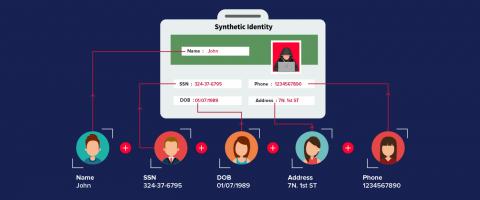
In this four-part series, we explore hypothetical cyberattacks inspired by real-life events in four different industries: healthcare, finance, manufacturing, and education. We’ll take a look at unforeseen security attack scenarios, and discover how user and entity behavior analytics (UEBA) can be leveraged to safeguard organizations. In this second post of the series, we’ll examine cyberattacks that threaten the financial sector.

Trick-or-treat down Halloween Cyber Street for cyber awareness

Halloween is perhaps the one night of the year where ghosts and ghouls roam freely on the streets. In reality, these are all just harmless children in costume; however, as you enter Halloween Cyber Street, you’ll come to find there are real threats lying in wait for an opportunity to strike. On Halloween Cyber Street, there are eight houses, each providing a webinar offering solutions on how you can protect yourself against different cyberthreats.

A catastrophic flaw in Linux sudo command with a simple fix using Desktop Central

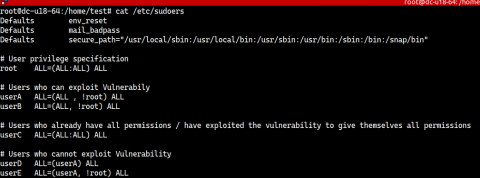
A critical vulnerability in sudo has been disclosed, that when exploited, enables users to bypass security restrictions and execute commands as the root user. This security flaw has to be swiftly remediated as sudo is one of the most integral and commonly used functionalities in Linux operating systems.

More Android malware and another iOS exploit: How to safeguard your devices?

The past few months have seen both Android and iOS fall prey to various security attacks, with more malware attacks and exploits being uncovered on a daily basis. First, let’s look at the newest zero-day Android vulnerability. This vulnerability leverages the ”use-after-free” memory flaw to wreak havoc on mobile devices. In layperson terms, the use-after-free flaw allows access to memory recently freed (after performing some operation) to execute malicious code.

Android malware: How do enterprises tackle this ever-growing menace?

Let us first agree on a couple of things before we start: One, Android is the most affordable platform for enterprises with a mobile-first/mobile-only workforce, and it has the smallest learning curve of any mobile OS. Two, due to its very open-source nature, Android is easy for malicious actors to pray on, with the Google Play Store being the breeding ground for many attacks.

Announcing ServiceDesk Plus 11.0 with rapid-start enterprise service desk capabilities

In late 2017, we announced enterprise service management (ESM) capabilities for our cloud model of ServiceDesk Plus. It helps organizations worldwide create unique service desk instances for each of their business functions like HR, travel, and facilities, and manage service delivery across their enterprise from a central platform. Now, we’ve expanded our ESM footprint to our on-premises model of ServiceDesk Plus.