Operations | Monitoring | ITSM | DevOps | Cloud

Observability in Practice

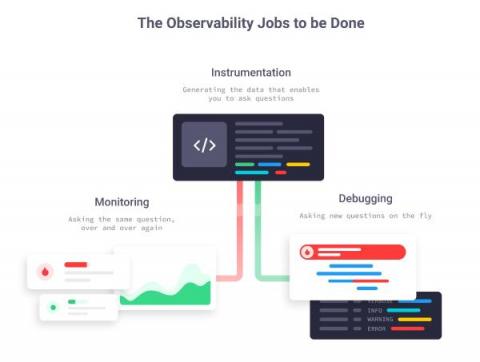
After years of helping developers monitor and debug their production systems, we couldn’t help but notice a pattern across many of them: they roughly know that metrics and traces should help them get the answers they need, but they are unfamiliar with how metrics and traces work, and how they fit into the bigger observability world. This post is an introduction to how we see observability in practice, and a loose roadmap for exploring observability concepts in the posts to come.

Seven Critical Capabilities to Look for in an AIOps Tool

In 2017, McAfee found that an average enterprise uses 464 custom applications. A large enterprise — a company with over 50,000 employees — uses 788 custom apps! The more applications you have, the more complex your application environment is. This means that you are more susceptible to outages. So, the tolerance for downtime is impossibly low. Mission-critical applications must be available at all times.

The Persistent Threat of Downtime in Banking and How to Solve it

At 8:54 pm on November 1, 2020, a customer of HDFC bank complained on Twitter that the bank’s services like internet banking and ATMs were down. More customers started raising similar issues over the next couple of hours, saying that UPI, credit card, and debit card transactions weren’t working either. Finally, at 11:55 pm, the bank confirmed that one of their data centers faced an outage. “Restoration shouldn’t take long,” they promised.

Strengthen Your Cloud Ops with Preventive Healing

The cloud is driving enterprise digital transformation. Gartner predicts that by 2026, public cloud spending will exceed 45% of all enterprise IT spending, a 2.5x growth from 2021. Enterprises globally are accelerating application modernization, embracing the cloud. This is giving rise to a few key trends. Software-as-a-Service (SaaS) adoption is on the rise. So, organizations are using applications whose implementation/infrastructure they have little or no control over.

Can A Cloud Managed Service Provider Turn Your Digital Transformation Dream Into A Reality?

The cloud has changed the world of IT — including IT services. In particular, it has enabled companies to dramatically decrease the amount of infrastructure they manage on-premises — reducing their need to use outside IT services to help them purchase, set up and maintain this infrastructure.

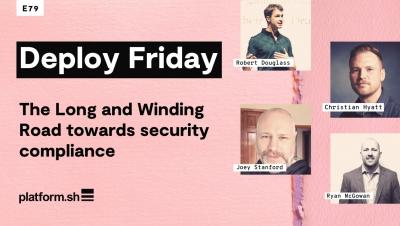
Deploy Friday: E79 The Long and Winding Road towards security compliance

Platform.sh has worked hard to be the most secure, compliant, and dependable business partner possible for our customers. To that end, we're able to provide data processing agreements (DPAs) for European GDPR, German BDSG, Canadian PIPEDA, and the Australian Privacy Act. We have been successfully audited for SOC 3 Type 2 and PCI DSS Level 1 compliance, and we've got more important acronyms in the works.
Sponsored Post

The HTTP/2 Landscape in 2021

When the internet first came into existence in 1983, its communication channels didn't exist, and it was just operational enough to be used for research purposes. In 1989, Tim Berners-Lee had the idea to develop a system for the internet using TCP/IP protocols. That public project at CERN introduced HTTP, HTML, World Wide Web (WWW), and a client-server as communication mechanisms. In this post, you'll learn how HTTP protocol works and how new versions brought it to where we are now, with the widely used HTTP/2 in 2021.