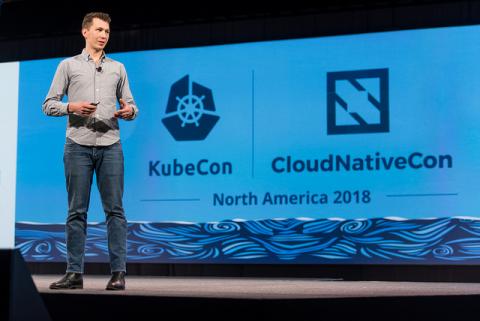
I made the trip up to Seattle for KubeCon North America at the end of 2018 along with a bunch of us from Sumo Logic. KubeCon is a conference that specializes in all things Kubernetes and focuses on updating the world on the state of the Kubernetes ecosystem. This year’s event was massive with 8,000 attendees, and talks given by representatives from Amazon Web Services (AWS), Google Cloud Platform (GCP), and Microsoft Azure to name a few big wigs that were there.
Mergers and Acquisitions (M&A) in the private sector have been experiencing unprecedented growth, not only in terms of the number of yearly global transactions, but also in terms of their value. M&As are also well-reputed for their exceptionally high failure rates, as highlighted by the Harvard Business review in 2016: “…companies spend trillions on acquisitions every year. Yet study after study puts the failure rate of mergers and acquisitions somewhere between 70% and 90%”.
The terms “omni-channel” and “multi-platform” may be used to describe many of the network operations or customer interactions of today’s businesses, and the administration of these operations must be wide-ranging and comprehensive to enable organizations to keep pace.
RUM and APM are two important acronyms to know if you work in software development or DevOps today. Moreover, not only is it important to be able to define RUM and APM — It’s also critical to understand the similarities and differences between each type of software monitoring process.
In many product development workflows, there are three main concerns: building, testing, and deployment. In this scenario, every change that is made to the code means something could accidentally go wrong, so to lessen the likelihood of this happening, developers assume many strategies to reduce incidents and bugs. One strategy is to adopt continuous integration tools (CI): used together with a source version software to verify if something has gone wrong for every update.