Operations | Monitoring | ITSM | DevOps | Cloud

Sponsored Post

How Collective IQ Turns Reactive IT into Truly Proactive IT

Most IT organizations still operate in "firefighting" mode: an employee opens a ticket, the service desk investigates, depending on severity and complexity multiple teams or people are involved to diagnose, and then the appropriate person or team fixes the issue. The whole process then repeats for the next reported incident. This model doesn't scale, drains time and budget, and leaves a huge number of issues unresolved because many employees simply don't bother to report them. And, if and when they do report them, it's too late, the problem has already impacted their productive work.
Sponsored Post

No SAP Expertise? No Problem. Automation Just Got Easier

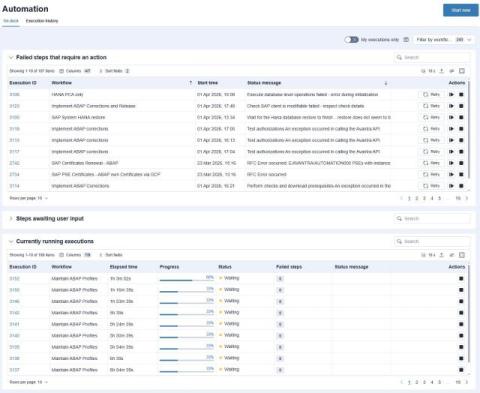
Avantra 21 introduced the concept of Automation workflows. By Avantra 23, compatibility with Ansible was added. Along the way, Avantra became the tool SAP teams reached for when they wanted system copies, refreshes, and backup orchestration to just run - predictably, on a schedule, without a senior engineer babysitting them. So, automation isn't new to Avantra users. Avantra made automation for SAP practical to deploy, predictable in operation, and easier to maintain.

Explore what's next in agentic operations: Introducing AI Week

Observability has traditionally been tacked on after your code hits production, but with agentic operations on the rise, that's no longer sustainable. Agents have dramatically increased the rate of change as they write more code, ship more changes, and operate more systems—all at a speed that compounds scale and complexity.

Smarter onboarding and planning with Grafana Assistant: How to ensure observability is baked in from the start

It's Monday afternoon and that feature you've been working on is mostly done. There's just one item still sitting untouched at the bottom of the ticket: "Add monitoring." You know you should. You also know the sprint ends tomorrow, nobody on the team is an observability expert, and figuring out what to measure—let alone how to write the PromQL for it—feels like a project all on its own. So it gets the same treatment it always does: "We'll add it when it breaks.".

Your platform team isn't a ticket queue, here's the fix.

Centralized ops creates a single point of failure: every request waits in line, and your best engineers spend their day gatekeeping instead of building. Self-service APIs change that. Developers get what they need without filing a ticket, and platform teams get their time back for the infrastructure work that actually moves the needle. Still routing everything through one central team? Tell us your setup in the comments.

How to Choose an Observability Platform: A Growth-Stage Framework

Every engineering team eventually hits the same wall: the monitoring stack that was fine six months ago now can't answer the questions you're actually asking during an incident. This isn't a tooling failure, it's a growth mismatch. The right observability platform at 10 engineers is rarely the right one at 100, and the cost of getting that wrong isn't the subscription fee, it's the migration you'll be forced into later, usually mid-incident, usually under pressure.

Zebra OneCare Services: Maximize Device Uptime and Security | Zebra

When it comes to maximizing the performance and longevity of your enterprise devices, choosing the right support plan is crucial. While Zebra Technical and Software Support (TSS) provides a solid foundation to keep you current, the real value for your enterprise lies in upleveling to Zebra OneCare Essential or OneCare Select. In this video, we break down the comprehensive benefits of Zebra OneCare services. Go beyond standard warranties with coverage for normal wear and tear as well as accidental damage.

5 Best eBay Listing Template Tools for eBay Sellers

Managing a small number of eBay listings manually may be relatively simple. However, the process becomes more difficult as a seller adds more products. Each listing requires accurate product information, clear images, item specifications, delivery details, return policies and a description that works properly across desktop and mobile devices. Creating every listing from the beginning can consume valuable time. It can also create inconsistencies when product descriptions are prepared by different team members or updated at different times.