Operations | Monitoring | ITSM | DevOps | Cloud

Unify and correlate frontend and backend data with retention filters

Teams can use Datadog Real User Monitoring (RUM) and RUM without Limits to get full visibility into the frontend health of their applications while retaining only the sessions that contain critical problems that affect the end-user experience. But application errors or slowness often result from backend issues, such as database bottlenecks. To diagnose these issues, you need to correlate the frontend data from RUM with the backend data from Datadog Application Performance Monitoring (APM).

Drift Under Control: Keep Your Infrastructure Consistent with Continuous Detection, Intelligent Analysis, and Safe Remediation

In cloud-native environments, infrastructure is in constant flux. Teams move fast, leveraging Infrastructure-as-Code (IaC), ephemeral resources, and automation to iterate quickly. But speed brings a cost: configuration drift. A single manual change in the cloud console, an untracked automation script, or an out-of-band fix can cause your infrastructure to fall out of sync with code. Over time, this erodes trust, breaks pipelines, and introduces silent risk.

From Monitoring Signals to Observability Maturity

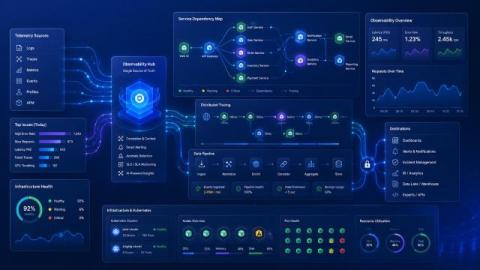
Efficient monitoring delivers fast results: alerts fire within seconds, dashboards refresh continuously, and teams know the moment something changes. Understanding arrives later. An alert may show that a value shifted, but it does not explain why it shifted, how far the impact will spread, or which components truly matter. Teams see the signal, not the system behavior behind it. This gap defines the limit of traditional monitoring. Detection has improved, but explanation has not kept pace.

AI Anomaly Detection: Catch AI Cost Surprises Before They Kill Margins

Consider this: traditional cloud cost monitoring was like checking your fuel gauge once a month — after the trip was already over. That model worked when infrastructure scaled slowly. You provisioned resources predictably and paid for stable, linear usage. AI breaks that model. Today, AI costs behave like a high-performance engine with a hypersensitive throttle. A small input, like a prompt change or a single power user, can dramatically increase your fuel burn in seconds.

A cleaner, customizable Bitbucket navigation is here

Last month we shared that a new navigation system is coming to Bitbucket, and we know many of you have been eager to see what it looks like. Today, we’re happy to share that the new navigation is available for to all Bitbucket users. This article covers what’s changing in Bitbucket, when it’s happening, and how you can share feedback with us.

SRE Report 2026: What surprised us, what didn't, and why the gaps matter most

This is the eighth edition of the SRE Report. Eight years of tracing reliability's arc, from uptime obsession to experience, from toil to intelligence, from systems to people. This year's report is also the first since Catchpoint joined LogicMonitor. We want to acknowledge their support in keeping this work going. They get what this report means to the reliability community, and that matters. We made a deliberate choice this year to say less.

The SRE Report 2026: Defensible Ns

You shouldn’t have to understand the care behind this report, unless it’s missing. For the past eight years, this research has focused on all things related to reliability and resilience. How systems behave under stress. How teams respond when things break. And how the practices continue to evolve. Reaching the eighth edition of The SRE Report attests to that and gives me pause. You can read the full report here and you can find a summary of the key findings here.

What's new in the release of Ivanti Neurons for ITSM ITAM LOB 2026.1 v1

The 26.1 release introduces new features and improvements, focusing on user experience and AI capabilities. Key dates for pilot and general availability are highlighted, along with community feedback integration. A five by five matrix aids in risk management, while ITSM data enhances compliance understanding. The Gentech AI framework emphasizes conversational agents, and updates to the neuron software inventory API improve accuracy. Continuous modernization efforts aim to boost performance and scalability.

What's New in Autonomous Endpoint Management (UEM, DEX, UWM, Platform) 2026.1

This Ivanti Neurons DEX session highlights updates, including support for operating systems, reporting enhancements, and new connectors like AWS S3. It also covers Microsoft Office 365 repair features, application healing, and improvements in Neurons for app control. Key points include new templates, PowerShell capabilities, and AI integration, all aimed at enhancing user experience and streamlining processes.