Operations | Monitoring | ITSM | DevOps | Cloud

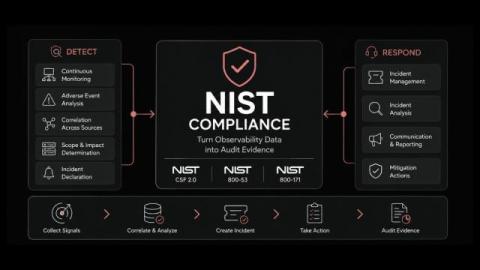
The New Compliance Crisis: AI Is Outrunning Its Controls

Enterprises have spent decades refining compliance frameworks around workflows that were linear, predictable, and well-documented. These frameworks were built for systems that executed actions deterministically and for human operators who made decisions slowly enough for oversight to keep up. In that environment, compliance could function as a retrospective discipline because the evidence required to validate behavior generally existed in complete, stable form.

Building Automated Document-to-Video Workflows for Enterprise Operations

In enterprise environments, the volume of documentation is staggering. An average Fortune 500 company maintains hundreds of thousands of documents across HR policies, engineering specifications, sales playbooks, compliance guidelines, and customer support knowledge bases. This content represents a massive investment in institutional knowledge, but its impact is limited by a persistent delivery problem: people do not read documents.

The sovereignty without toil guide: why compliance shouldn't require a Kubernetes tax

True data sovereignty isn't about managing your own cloud accounts; it’s about where your data resides and how it is governed. By utilizing a unified configuration file to deploy on sovereign infrastructure like OVHcloud, Upsun provides standardized sovereignty without the complexity of “Bring Your Own Cloud”.

Why Document Workflows Break at the Security Layer

Document transmission has always been a quiet backbone of enterprise operations - moving contracts, patient records, legal filings, and financial data between departments, clients, and regulatory bodies. But as infrastructure modernizes, a persistent blind spot keeps surfacing: the handoff between document workflows and secure transmission channels remains fragile, especially when compliance requirements enter the picture.

HIPAA-Compliant Messaging and Clinical Communication

In today’s fast-paced healthcare environment, patient outcomes rely entirely on immediate, accurate, and secure information transfer. Mismanaged communication is costly; industry data suggests that communication failures contribute to an estimated $12 billion in annual revenue loss and are linked to nearly 30% of malpractice claims.

What Compliance Training Software Should Do for Your Business

Compliance training software has become crucial for every business today. The main goal of this software is to ensure organizations remain compliant with various laws and regulations. This practice helps safeguard an organization from threats and consequences. At the same time, these software solutions should do more than just cover the regulatory requirements. They should also help employees, minimize mistakes, and promote team integrity.

How Unified Vulnerability Management Improves Security and Reduces Risk

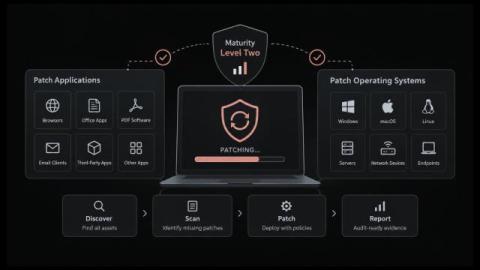
In today's rapidly changing digital landscape, organizations face an unprecedented level of cyber threats. Vulnerabilities in software, hardware, and network configurations are exploited daily, leading to data breaches, financial losses, and reputational damage. Traditional vulnerability management often struggles to keep pace with the sheer scale and complexity of modern IT environments. This is where unified vulnerability management comes into play. But what is unified vulnerability management, and how does it make a meaningful difference in improving security and reducing risk?

Datadog for Government achieves FedRAMP High certification

Modern government missions depend on software platforms that can perform under demanding conditions. As agencies update systems that support public safety, benefits delivery, financial operations, and national priorities, they face security and compliance requirements that shape how technology is adopted as well as how it is built, operated, and evolved over time.

Test Data Management and SOC 2 Compliance | The Tony and Tonie show Ep43

SOC 2 compliance isn’t just about protecting data in your production systems. Your test data may also be exposing you to risk. Here’s how to get it under control. Using production data outside prod is one of the fastest ways to create compliance risk. Tony and Tonie discuss how a Test Data Management approach gives you the control, automation and traceability that SOC 2 demands, without slowing down development.

How Financial Institutions Are Rethinking Risk Management in a Digital-First World

Financial services have undergone a rapid digital transformation over the past decade. Nowadays, institutions are able to scale up faster and service customers more efficiently through cloud infrastructure, real-time payments, and API-driven platforms. But this shift also introduced a more complex risk landscape. Risk management is no longer confined to compliance teams and periodic audits. It's now embedded in day-to-day operations. As financial institutions modernize, they need to rethink how they identify, monitor, and mitigate risks across their entire tech stack.