
Operations | Monitoring | ITSM | DevOps | Cloud

Particle's Fleet Health Feature, Powered by InfluxDB, Delivers Device-Specific Data for IoT Deployments

The Particle platform enables companies to manage and program their IoT devices, bringing them to market quicker. To accomplish this, Particle developers needed to be able to collect telemetry data from a large number of edge IoT devices to measure performance. A key benefit of the Particle platform is its ability to scale from prototype to enterprise. Developers often prototype IoT devices using microcontrollers like Arduino or Raspberry Pi.

Prescient Devices Makes Managing IoT Edge Devices Easy with InfluxDB

Prescient Devices focuses on changing the way businesses think about and use edge data and industrial IoT. The company built Prescient Designer, an edge data solutions platform that gives organizations the boost they need to transform their IT/OT processes. Prescient’s products empower data engineers, system integrators, and innovators to easily design and orchestrate edge-to-cloud data solutions.

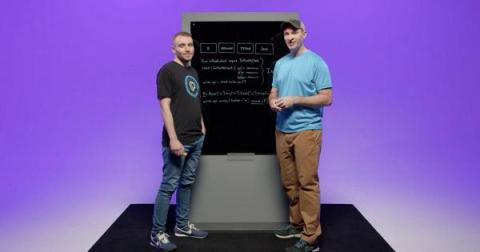
TL;DR InfluxDB Tech Tips: Handling JSON Objects and Mapping Through Arrays

There are multiple ways to use Flux to bring in data from a variety of different sources including SQL databases, other InfluxDB Cloud Accounts, Annotated CSV from a URL, and JSON. However, previously you could only manually construct tables from a JSON object with Flux as described in this first example. We’ll describe how to work with three examples with increasingly complex JSON types. First we will describe how to work with these JSON types with metasyntactic examples.

Python MQTT Tutorial: Store IoT Metrics with InfluxDB

MQTT is a standard messaging protocol used for the Internet of Things (IoT) because it requires minimal resources and can be executed by small microcontrollers found in connected devices. IoT devices have a real need for this type of lightweight protocol because it guarantees fast and reliable communication with minimal hardware requirements, keeping power consumption and manufacturing costs low.

TL;DR InfluxDB Tech Tips: From TICKscripts to Flux Tasks

If you’re a 1.x user of InfluxDB, you might be a Kapacitor user as well. If so, you’re also familiar with TICKscripts, the data processing and transformation language for Kapacitor, the batch and stream processor for InfluxDB. Kapacitor is a great tool, but it’s largely a black box, so using and implementing TICKscripts to execute data processing tasks, checks, and notifications can be a challenging developer experience.