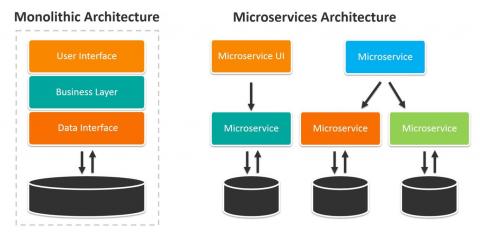
Enterprises are increasingly pressured by competitors and their own customers to get applications working and online quicker while also minimizing development costs. These divergent goals have forced enterprise IT organization to evolve rapidly. After undergoing one forced evolution after another since the 1960s, many are prepared to take the step away from monolithic application architectures to embrace the microservices approach.
We recently had the opportunity to share the lessons we have learned about container security from deploying Kubernetes and OpenShift in the field. If you don’t have time to watch the full recording of our conversation, here are a few highlights.
Smarter people than myself, once said that you should do things you don’t like first so that you can enjoy the things you’re doing later. Nobody wants cold starts. They’re annoying, and we continuously feel an itching sensation in our brains because of them. The serverless world would be a much better place to work in if they weren’t there.
As applications are getting more complex, it’s becoming harder to deliver high-quality applications. Tools likeJavaScript has come a long way in recent years. Browsers are becoming more robust and machines are growing more powerful. Pair this with the recent development of Node.js for execution of JavaScript on servers, and you can understand why JavaScript has exploded in popularity.
More than 20,000 environments have chosen Rancher as the solution to make the Kubernetes adventure painless in as many ways as possible. More than 200 businesses across finance, health care, military, government, retail, manufacturing, and entertainment verticals have recognized that Rancher simply works better than other solutions.
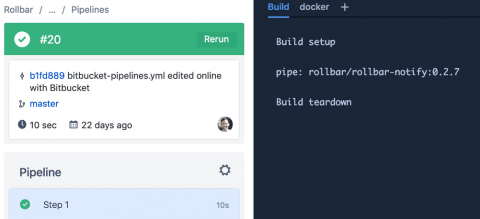
Automating your deployment process is a critical step towards adopting continuous delivery. For teams that use Bitbucket for hosting their source code, Bitbucket Pipelines provide an easy way to automatically build and deploy when changes are made in your origin repository. The Rollbar team is excited to participate in the launch of Bitbucket Pipes, which make it even easier to configure your pipeline.
The days when you could simply SSH into a server and perform a fancy grep are long gone. If you’re reading this article, chances are either you are looking to move from that obsolete approach to a centralized logging approach with a log management tool, or you are looking for an alternative log management tool to replace your existing solution. Problem is, there are so many different tools out there, making a choice can be overwhelming. So how do you pick the right solution?