Operations | Monitoring | ITSM | DevOps | Cloud

Why Everyday Technology Is Becoming More Situational

Your phone does not treat every moment the same anymore. It knows when you are driving, sleeping, walking, shopping, searching, working, or moving through an unfamiliar place. Everyday technology is no longer built only around buttons and commands. It is being shaped around context. This is the real change behind modern AI, smart devices, apps, vehicles, and digital services. They do not only ask, "What did the user click?" They ask, "What is happening right now, and what should happen next?"
The Growing Link Between Smart Tech and Real-World Accountability

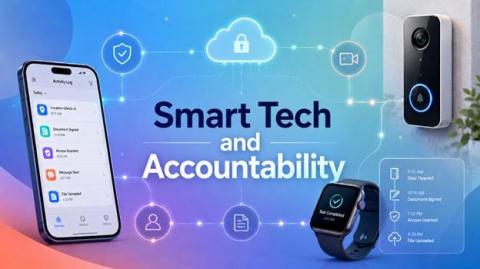
Smart devices are no longer just helping people unlock doors, track steps, pay bills, manage work, or receive alerts. They are creating records. A doorbell camera can confirm who entered a property. A smartwatch can show when movement suddenly stopped. A workplace app can reveal who approved a task. A delivery platform can prove when an order changed hands. A cloud dashboard can show who accessed a file. Smart technology is turning ordinary actions into traceable events, and that is changing how accountability works in daily life.

From Evidence to Outcome: Technology's Impact on Injury Claims

Injury claims are no longer built only on statements, photos, and medical bills. A single claim can now involve vehicle data, phone records, surveillance footage, digital medical files, telematics, billing systems, and AI-assisted document review. That shift matters because technology does not simply add more evidence. It changes how fault is proved, how injuries are connected to an event, how damages are calculated, and how quickly a claim can move from dispute to outcome.

Episode 13 - AI: The Hidden Layer (Part 1)

What does enterprise AI look like when the user is no longer human? In this episode of The Intelligent Enterprise, host Tom Stoneman sits down with Ash Ashutosh, CEO of Pinecone and a three-time founder, to explore the next evolution of AI infrastructure: from vector databases built for humans using chatbots, to knowledge engines designed for AI agents that need to understand context, take action, and get work done.

Five worthy reads: Brains or bots-are we forgetting how to think?

Five worthy reads is a regular column on five noteworthy items we’ve discovered while researching trending and timeless topics. This week, we are exploring how prolonged dependence on AI could influence human beings' neural pathways, cognitive habits, and the behavioral changes that follows. As children, many of us would have watched the juggler at a circus in amazement. One ball became two, then three, and several more since it was a cumulative act.

Cursor outage on July 16, 2026: high load errors worldwide and how to keep working

Cursor was hit by a global “high demand” outage on July 16, 2026, returning ERROR_RESOURCE_EXHAUSTED errors that blocked AI requests for just over two hours. StatusGator caught it early, sending an Early Warning Signal at 06:49 UTC, 12 minutes before Cursor acknowledged the incident at 07:01 UTC. Here is the full picture, including the workaround that kept many users coding.

Langflow Observability with OpenTelemetry and SigNoz

Learn how to implement end to end monitoring and observability for Langflow using OpenTelemetry and SigNoz. In this video, we walk through instrumenting Langflow workflows, collecting traces, metrics, and logs, and visualizing everything in SigNoz to gain real time visibility into flow execution, LLM requests, tool calls, token usage, latency, failures, and performance bottlenecks. Langflow ships with built in OpenTelemetry support, making it easy to export telemetry to SigNoz with minimal configuration.

Bridging the AI context gap: Why your IDE needs a platform contract

Hosting an MCP (Model Context Protocol) server on Upsun lets AI IDEs like Cursor, Codex, Claude Code and Windsurf reach real infrastructure context (database schemas, service logs, environment variables), closing the gap between local coding assistants and your cloud environment.

Answer any cost question faster with the Cloud Cost skill in Bits Chat

Managing cloud, AI, and SaaS costs means answering a steady stream of questions from finance, leadership, and engineering teams. What changed? Which team owns the spend? Was an increase expected? Are we still on track against the budget? When each answer requires moving between dashboards, filtering cost data by team or service, or manually correlating billing data with observability data, it can slow down investigations while costs continue to rise.