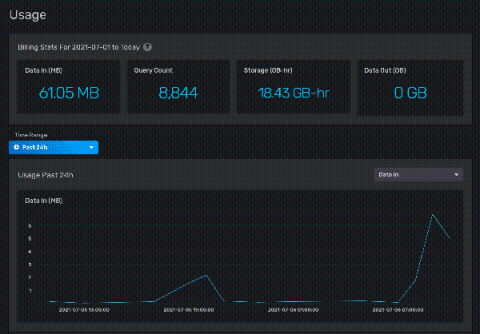
In this post, we will describe a simple way to share data from multiple InfluxDB 2.0 OSS instances with a central cloud account. This is something that community members have asked for when they have OSS running at different locations, but then they want to be able to visualize some of the data or even alert on the data in a central place. Please note that while the method presented here is simple and fast to set up, it has many limitations which may make it inappropriate for your product use case.
Since the initial release of InfluxDB OSS 2.0 in November 2020, more than 10% of the community has successfully upgraded, and the pace of the upgrades continues at a steady rate. We have released a number of maintenance releases to address defects, expand platform coverage, and enhance the update experience based on feedback.
One of the things we needed to either adopt or build for InfluxDB IOx is a database catalog. If you haven’t heard us talk about it yet, InfluxDB IOx (pronounced eye-ox) is the new in-memory columnar database that uses object storage for persistence. We’re building it as the future core of InfluxDB. A database catalog usually contains the definitions of a database’s structure like schema and indexes.
In this post we’ll explore the concepts of data lake, data hub and data lab. There are many opinions and interpretations of these concepts, and they are broadly comparable. In fact, many might say they’re synonymous and we’re just splitting hairs. But let’s look again carefully. We can discern some subtle trends in the way people are doing things, and find distinctions in these expressions.
This article will show how we kept cardinality under control with a few tweaks in the Telegraf configuration. If you’re not yet familiar with it, Telegraf is the native and open-source plugin-driver metrics collection agent of InfluxDB. As you may know, cardinality is the combination of measurements, tags, sets, fields, and values in a time-series database, and having high cardinality can be a challenge.
Have you ever heard anyone saying: “Our data is great, we’ve never had any data quality issues“? Ensuring data quality is hard. The magnitude of the problem makes us believe that we need some really big actions to make any improvements. But the reality shows, often the simplest and most intuitive solutions can be incredibly impactful. In this article, we’ll look at one idea to improve the process around data quality, and make it more rewarding and actionable.
As companies accelerate their digital transformation, technology innovations are now a critical component of any business strategy. Industry leaders are spending more money on technology than their counterparts, prioritizing growth and customers. CEOs now see CIOs and tech leaders as their primary partners in driving business innovation.