Operations | Monitoring | ITSM | DevOps | Cloud

POPIA Compliance: What It Requires and How Motadata Supports It

If your organization handles the personal information of people in South Africa, POPIA compliance is not optional. The Protection of Personal Information Act has been fully enforceable since 1 July 2021, and the Information Regulator now backs it with administrative fines of up to ZAR 10 million. The requirement your IT and security teams own most directly is security safeguards under Section 19, and it is the first place a regulator looks after a breach.

What Is a CMDB, and Why Is It Called the Heart of ITSM?

In this video, discover why a Configuration Management Database (CMDB) is considered the heart of IT Service Management (ITSM). Learn how a CMDB helps IT teams understand dependencies, assess change impact, accelerate incident resolution, and build a reliable foundation for service management processes.

What is Compliance in ITAM? Regulations, Penalties & Best Practices

Managing IT assets smoothly is not an easy task. Organizations depend more on technology to execute their operations these days. Hence, the requirement for effective IT Asset Management (ITAM) has grown considerably. However, beyond merely managing these assets, ensuring compliance with relevant ITAM regulations and standards matters just as much. And, in this race to keep up with changing regulations, you are not alone. Many organizations face the same challenge.

What is IT Service Management (ITSM)? Everything You Need to Know

When a critical application crashes, how does your IT team respond? Is there a documented process everyone follows, or does the outcome depend on who happens to be available at the time? Without structured service management, responses often vary from one situation to another. hat inconsistency leads to delays, missed handoffs, and slower resolution of issues. Requests become harder to track, and recurring problems continue to disrupt day-to-day operations.

Service Level Agreement (SLA) Templates: Examples, Metrics, and Best Practices

How quickly should your team resolve a critical ticket, and what are the consequences when it misses the target? That is exactly where Service Level Agreements (SLAs) come into play. An SLA turns service expectations into measurable commitments by defining clear response and resolution targets. Rather than starting from scratch, an SLA template provides a structured foundation for establishing those commitments and tracking performance against agreed standards. Why does that matter?

3 Signs Your Network Monitoring Is Failing You

Are users reporting issues before your monitoring tools do? Are critical alerts getting lost in the noise? Does root cause analysis take hours instead of minutes? These are 3 signs your network monitoring is failing. Discover how modern observability helps teams detect issues faster and resolve them with confidence.

Why Does Network Topology Decide How Fast Your Network Recovers?

In this video, learn why network topology plays a critical role in network resilience, troubleshooting, and recovery. Discover how understanding network dependencies, eliminating single points of failure, and maintaining clear visibility can help IT teams reduce downtime and accelerate incident response. In this video, you'll learn.

9 Powerful Log Monitoring Best Practices to Follow in 2026

How many of your last five incidents were already sitting in the logs before anyone noticed? Most teams already collect more than enough log data. The problem starts with what happens next, and the same four gaps show up almost everywhere: This guide covers the log monitoring best practices that close those gaps. It walks through how to collect, structure, correlate, retain, and secure logs, so monitoring becomes a steady process and not a scramble during the next incident.

How to Reduce MTTR: 5 Proven Strategies for Enterprise IT Teams

Every minute of downtime impacts your business. Mean Time to Resolution (MTTR) measures how quickly your team can resolve incidents and restore services. In this video, learn 5 proven ways to reduce MTTR using unified observability, AI-powered alert correlation, automated runbooks, and ITSM integration to resolve incidents faster and minimize downtime. In this video, you'll learn.

How AI is Reshaping IT Operations Management

AI is transforming IT operations through automated incident response, intelligent event correlation, predictive analytics, and agentic AI. But while technology is evolving rapidly, human judgment and strategic decision-making remain essential. In this video, explore what's changing in IT operations, what isn't, and how IT leaders can prepare for an AI-driven future with AIOps, observability, and automation. Learn how Motadata helps organizations build smarter, more proactive IT operations.

How to Choose the Right Server Monitoring Tool: A Step By Step Guide for 2026

How do you pick one server monitoring tool when every vendor page promises the same thing? A few years ago, two monitoring vendor websites showed you two different products. Today you can open five and read nearly the same feature list on each one. Real-time dashboards, instant alerts, AI everywhere. That sameness has made evaluation harder than ever. The marketing tells you nothing, and the wrong choice follows your team for years, either as features nobody opens or as the one missed alert at 2 a.m.

What is Automated Patch Management?

Learn why manual patch management creates unnecessary risk for IT teams and how automated patch management helps organizations improve security, compliance, and operational efficiency. Discover how automation eliminates repetitive tasks, reduces human error, prioritizes critical vulnerabilities, and accelerates patch deployment across the entire IT environment.

What is SRE Observability and Key Pillars You Should Know?

What happens when a critical service slows down, but nothing is technically “broken”? Most teams have monitoring in place. They know when something goes down. But when performance drops or issues spread across services, finding the real cause becomes slow and unclear. Engineering teams end up switching between dashboards, logs, and alerts just to understand what changed. This delays response and increases pressure on on-call teams. This is where SRE observability becomes essential.

11 Incident Management Best Practices Every IT Team Should Follow

A well-defined incident management process can mean the difference between a minor disruption and a major business outage. When critical services fail, every minute of downtime matters. Yet many IT teams still face challenges such as unclear ownership, poor prioritization, communication gaps, alert fatigue, and manual processes that delay resolution. The result is longer outages, missed SLAs, and frustrated users.

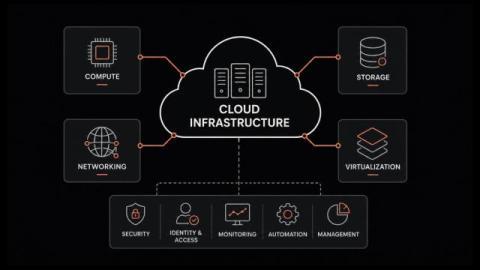
What is Cloud Infrastructure? Everything You Need to Know

Modern businesses need infrastructure that can scale as quickly as their demands change. Yet many organizations still struggle with infrastructure that is costly to maintain, difficult to expand, and slow to adapt to new requirements. As applications, users, and data continue to grow, managing resources efficiently becomes increasingly challenging. Cloud infrastructure provides a more flexible approach.

What is ITSM Automation: A Complete Guide for 2026

Repetitive work is what slows down most service desks, not a lack of people. Most IT teams spend their day handling repetitive work like password resets, ticket routing, access approvals, and standard service requests. This creates constant backlog pressure, slows resolution, and increases avoidable errors. Adding more people does not solve the underlying issue. ITSM automation addresses this by moving routine, rule-based tasks into automated workflows.

Service Desk Automation: What It Is and How to Get Started

How much of service desk work is problem solving and how much is repeat work that continues every day? Most service desks follow the same pattern daily. Password resets, access requests, software installs, approvals, and routine fixes keep coming in. These tasks are simple on their own, yet together they take most of the team’s time and push important incidents further down the queue. The main challenge is the constant flow of repeat work that reduces time for focused tasks.

15 DevOps Metrics Every Engineering Team Should Track in 2026

Software moves from code to production more quickly today, but it is still difficult to tell whether delivery is actually improving or just becoming more active. Most teams rely on dashboards filled with metrics like deployments, uptime, failures, and tickets. The numbers are available, but the meaning behind them is often unclear. DevOps metrics become useful only when grouped into clear categories: DORA metrics cover only delivery speed and stability, which is just part of the picture.