Operations | Monitoring | ITSM | DevOps | Cloud

The latest News and Information on Cloud monitoring, security and related technologies.

How To Fix Spark Performance Issues Without Thinking Too Hard

At Pepperdata we have been analyzing many thousands of Spark jobs on many different clusters, on-prem and cloud production clusters running Spark across a variety of industries and applications, and even workload types. In this presentation, Alex and I are going to cover a very brief intro to Spark, and we'll discuss some of the common issues we have seen and the symptoms of those issues and also how you can address and overcome some issues like that without having to think too hard.

JFrog CloudFormation Modules Make Provisioning to AWS Easy and Secure

A routine cloud operations task should have a routine solution. That’s why we’ve just made it a lot easier to install and maintain self-hosted instances of the JFrog DevOps Platform on AWS, through AWS CloudFormation. To further simplify the effort of self-hosting Artifactory and Xray on AWS, we’ve just published a set of AWS CloudFormation modules to the AWS CloudFormation Public Registry.

Stackery announces the availability of Bastion modules on the CloudFormation Public Registry

AWS CloudFormation Modules, now available for public use through the AWS CloudFormation Public Registry, are a huge step forward for enterprise IT teams to create large manageable Infrastructure-as-Code (IaC) practices around CloudFormation. We’re excited to support the launch today with our own Bastion module. Unsure what Modules are? Read on.

New Research by IDC, Sponsored by PagerDuty, Explores How Organizations Can Reach CloudOps Maturity

Many organizations have made the shift to the cloud in recent years, and many more are planning to or are just starting their cloud migration journeys now. However, some organizations struggle to realize value from this move. The benefits of cloud are clear: it’s flexible, scalable, and has a low cost of entry. But cloud can also bring complexity—creating new interdependencies, more services to manage, and more data and signals to monitor.

How to set up Elastic Cloud: Advice from Elastic Support

I hate reinventing the wheel once I find a good setup. On top of that, I dislike searching for all the links I used to come up with the “ultimate setup” for different services. So, I decided to outline for myself (and for you of course) my default setup when I deploy on Elastic Cloud to set myself up for success and automate insight for the future. Most of my setup steps make monitoring accessible or automate various warnings to myself.

Organizations Grapple with Skyrocketing Cloud Costs, Anodot Survey Finds

The pandemic upended business for many or at the very least cast a grim shade of uncertainty, so, as many took to working from home, they also were commissioned with cutting waste. Among the biggest sources of misspend in 2020 – cloud services. And remote work may have actually spurred the problem, as organizations migrate more applications to the cloud to support these workers.

Tutorial: Set Up Event Streams in CloudWatch

When building a microservices system, configuring events to trigger additional logic using an event stream is highly valuable. One common use case is receiving notifications when errors are seen in one of your APIs. Ideally, when errors occur at a specific rate or frequency, you want your system to detect that and send your DevOps team a notification. Since AWS APIs often use stateless functions like Lambdas, you need to include a tracking mechanism to send these notifications manually.

Fully Managed Data Analytic Service Optimized for Large volume of Streaming Data

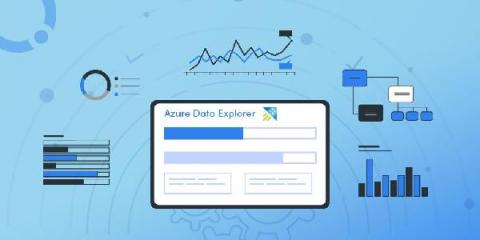
This blog will explain the Azure Data Explorer, its core concepts, and a few of its significant features. As the data generated by enterprises is growing day by day, data strategists are looking for more effective techniques to handle a massive volume of diverse data. With all these requirements, there emerges a need for a service that can collect, store, and analyze data with optimal performance. Let us see how Azure Data Explorer addresses these requirements.