Galileo Cloud Compass Tech Talk
Join us as the Principal of ATS Group talks with Dave Hamilton and Steve Horan about the creation of Galileo Cloud Compass, part of the Galileo Suite.


The latest News and Information on Cloud monitoring, security and related technologies.
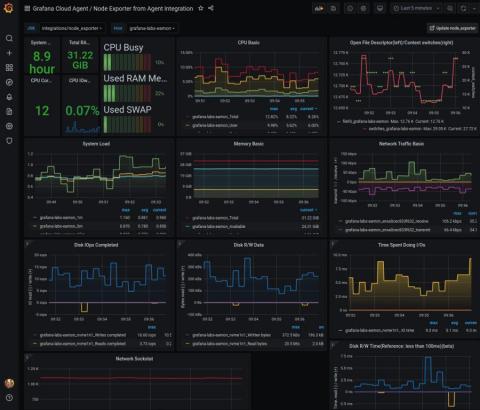
Hi folks! Éamon here. I’m a recent-ish addition to the Solutions Engineering team and just getting my feet wet on the blogging side so bear with me. :) Back in March, we introduced the Grafana Cloud Agent, a remote_write-focused Prometheus agent. The Grafana Cloud Agent is a subset of Prometheus without any querying or local storage, using the same service discovery, relabeling, WAL, and remote_write code found in Prometheus.
While we know the many benefits of going serverless - reduced costs via pay-per-use pricing models, less operational burden/overhead, instant scalability, increased automation - the challenges are often not addressed as comprehensively. The understandable concerns over migrating can stop any architectural decisions and actions being made for fear of getting it wrong and not having the right resources.
Information security (infosec) is a broad field. Its practitioners behave more like artists than engineers. After all, the mandate for security is not “do X”, but instead “ensure no one can do X, Y, Z, ɑ, β, ɣ, etc.”. The array of possibilities leading to infosec failure are vast. It’s like trying to prove a negative, thus making the task near impossible. On one hand we have an impossible task, on the other we have the affordance of time.
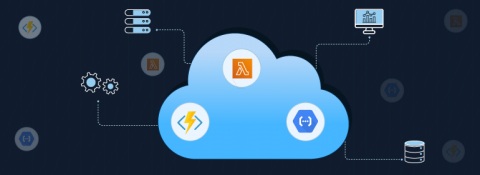
Applications have traditionally been run on servers, which have to be closely monitored to ensure there are no hindrances in production. In the case of serverless computing, you no longer have to manage servers, as the onus falls on cloud service providers. Read along to discover more about serverless computing, including some of its advantages and disadvantages. So what actually is serverless computing?
Ten years ago, Amazon found that every 100ms of latency would cost them roughly 1% in sales. This is a pretty clear statement on the importance of user experience! It’s especially true in today’s ultra-competitive market where the cost of switching (to another provider) for consumers is lower than ever. And one of the most common performance issues in serverless architectures is related to elevated latencies from services we depend on.
We’re pleased to introduce you to the latest Elastic Cloud features and functionality. Grab a cup of your favorite beverage and five minutes, and let’s dive in.