The latest News and Information on Containers, Kubernetes, Docker and related technologies.
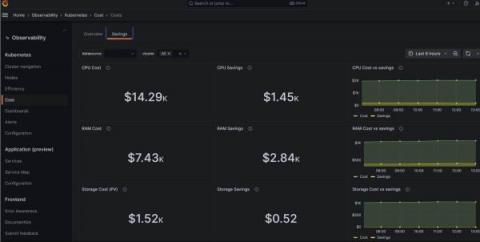
As your Kubernetes infrastructure — and your business — grows, so too does the headache of managing your stack. And since controlling costs is crucial for your organization’s well-being, you need visibility into your complex system to ensure you’re spending your money wisely. That’s why we’re excited to introduce Kubernetes cost monitoring as a new feature in Grafana Cloud.
As we are now 6 months into the year, I thought this would be a great time to sit and reflect on everything that has happened at Civo so far (and some of the plans we have in the pipeline). If you’re interested in taking a look at our previous roadmaps.
Reviewing the Current State of Infrastructure as Code (IaC), its Challenges, the Emergence of Crossplane, Adoption Difficulties, and the Road Ahead! Infrastructure as code (IaC) has become an indispensable practice for managing and deploying cloud-native applications. By defining infrastructure through code, developers can efficiently and consistently manage their infrastructure. In this post, we’ll delve into the state of IaC, the problems it poses, and the new approach offered by Crossplane.
As Kubernetes continues to gain popularity as a container orchestration system, mastering its command-line interface becomes increasingly vital for DevOps engineers and developers alike. Kubectl, the Kubernetes command-line tool, is an essential component in managing and deploying applications in a Kubernetes cluster. This tool allows you to interact directly with the Kubernetes API server and control the state of your cluster.
In this post we will examine using NeuVector Network rules to enable multi-tenancy isolation in openshift. Also how we can isolate external traffic from specific workload.
In this post we will explain how to use OpenShift monitoring (alert manager) to monitor NeuVector using NeuVector prometheus-exporter NeuVector has published a Prometheus exporter which we will use in the post.
AWS Fargate is a serverless pay-as-you-go engine used for Amazon Elastic Container Service (ECS) to run Docker containers without having to manage servers or clusters. The goal of Fargate is to containerize your application and specify the OS, CPU and memory, networking, and IAM policies needed for launch. Additionally, AWS Fargate can be used with Elastic Kubernetes Service (EKS) in a similar manner.
Before attending Icinga Berlin in May this year, Daniel Bodky and Markus Opolka from our partner NETWAYS developed the very first Icinga Kubernetes Helm Charts and released it in an alpha version. If you have ever wanted to deploy an entire Icinga stack in your Kubernetes cluster, now is your chance. I also want to highlight Daniel’s talk again on how Icinga can run on Kubernetes and the challenges involved.