The latest News and Information on Containers, Kubernetes, Docker and related technologies.
Kubernetes is the gold standard for container orchestration at scale. While massive global companies like Google, Spotify, and Pinterest rely on Kubernetes to run their software in production, so do many small but mighty developer teams. (Full disclosure: Honeycomb joined the Kubernetes brigade last year, when we migrated some of our services.)
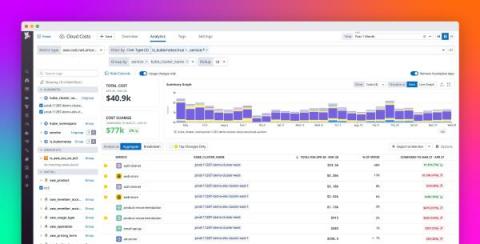
Rising container usage has fueled a growing reliance on container orchestration systems such as Kubernetes, EKS, and ECS. As organizations increasingly opt to run these systems in the cloud, their cloud spend tends not only to grow but also to become more opaque due to the dynamic complexity of these environments. Typically, various services, teams, and products share cluster resources, and as nodes are added and removed, those resources continuously shift.
18 million — that’s the number of developers around the world who use Docker, the popular tool for containerization. Docker Desktop, a software application for Mac, Windows, and Linux, is one of the most widely used tools within the Docker ecosystem, especially among developers who want to build, test, and deploy applications in containers on their local machines.
As we continue to see rapid technological advancements, organizations must evolve and adapt to maintain a competitive edge. The principles of DevOps - collaboration, automation, continuous integration, and delivery - have emerged as critical success factors in this landscape, enabling organizations to navigate the ever-changing environment.
In Kubernetes, the Domain Name System (DNS) plays a crucial role in enabling service discovery for pods to locate and communicate with other services within the cluster. This function is essential for managing the dynamic nature of Kubernetes environments and ensuring that applications can operate seamlessly. For organizations migrating their workloads to Kubernetes, it’s also important to establish connectivity with services outside the cluster.
June 7, 2023 It’s no secret that Kubernetes is one of the fastest-growing technologies in use today for deploying and operating applications of all types in the cloud. It’s also no secret that Kubernetes’ popularity is a significant contributor to fast-growing cloud bills. FinOps teams are constantly looking for ways to lower their cloud spend, in cooperation with the DevOps, Engineering and App owner teams that control this infrastructure.