The latest News and Information on Containers, Kubernetes, Docker and related technologies.
For this article we’ll dig into some of the options for Local Kubernetes Clusters if you are developing on a Mac. When doing microservices development, eventually you will want to start to test integrated services together. And there are several options available to run these tests: Tests were conducted on a 2019 MacBook Pro (Big Sur). I’m not embarrassed to say that I cut my teeth on minikube. This is the recommended path for onboarding into Kubernetes and has a ton of benefits.
I recently had the opportunity to read the book “No Rules Rules: Netflix and the Culture of Reinvention” by Reed Hastings and Erin Meyer of Netflix, and it dawned on me that while this book wasn’t at all focused on Netflix’s technology, the global company-wide culture had a significant impact on its technology choices. The book focuses on the many times Netflix had to reinvent itself and transform its business in order to revolutionize the entertainment industry.
Our friends at Buoyant, creators of Linkerd, have just launched the public beta of Buoyant Cloud, the best way to run Linkerd in mission-critical environments. We're happy to announce that Civo users are eligible for $100 in free Buoyant Cloud credits. Read on to learn more!
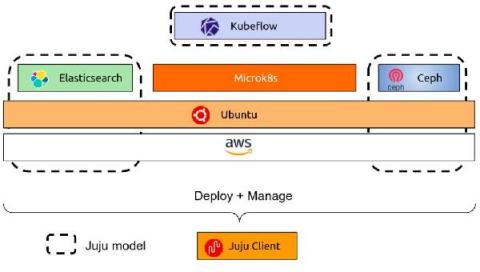
Microsoft has discovered a new large-scale attack targeting Kubeflow instances to deploy malicious TensorFlow pods, using them to mine Monero cryptocurrency in Kubernetes cluster environments. Kubeflow is a popular open-source framework often used for running machine learning tasks in Kubernetes. TensorFlow, on the other hand, is an open-source machine learning platform used for implementing machine learning in a Kubernetes environment.
Kubernetes is an open source container orchestration system for automating computer application deployment, scaling, and management, and seems to have established itself as the de facto standard in this area these days. The shift from monolithic applications to microservices brought by Kubernetes has enabled faster deployment, where dynamic environments become commonplace. But on the other hand, this has made monitoring applications and their underpinning infrastructure more complex.
London, UK, June 29, 2021 – Despite high adoption rates of cloud native technologies in recent years, enterprises have yet to cross the chasm to full adoption, but they’re quickly moving in that direction, according to initial results of a first-of-its kind survey released today by Canonical, the publishers of Ubuntu.