Operations | Monitoring | ITSM | DevOps | Cloud

The latest News and Information on Containers, Kubernetes, Docker and related technologies.

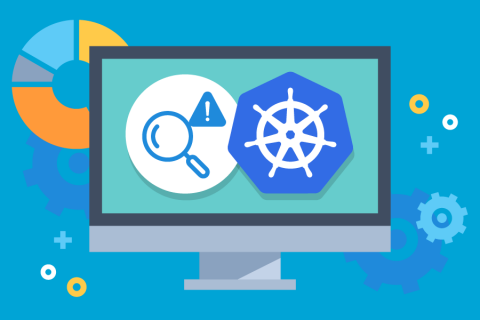
Observe & Troubleshoot Your Kubernetes Environments with Dynamic Service Graph

Kubernetes workloads are highly dynamic, ephemeral, and are deployed on a distributed and agile infrastructure. Application developers, DevOps teams, and site reliability engineers (SREs) often require better visibility of their different microservices, what their dependencies are, how they are interconnected, and which other clients and applications access them. This makes Kubernetes observability challenges unique.

Kubernetes Service Mesh Focus - Civo Community Meetup #8

This time around the topic was Kubernetes service meshes and the role they play in providing visibility and open communication between your pods/containers. Saiyam Pathak, Director of Technical Evangelism at Civo, will be led the talk and discussed the concept of service meshes and best practices. Kai Hoffman, Developer Advocate at Civo, outlined the Service Mesh Interface, a project to standardise service mesh specifications on Kubernetes.

How to debug a Kubernetes application

How can you easily debug a Kubernetes application? In this episode of Kubernetes Essentials, we show how you can use the kubectl command line tool to identify and resolve bugs within your application. Watch to learn how you can use this tool to easily debug and gain greater observability over your Kubernetes application!

New Website!

We’re happy to debut our new website, highlighting our newest features! We’ve been busy updating our product UI and decided to showcase some of the work on the site. All of our case studies, whitepapers, and datasheets are now in the Resources page. We’ve also been featured on a variety of news sites, podcasts and blogs. We linked all of them in the “Speedscale in the Media” section.

Run the HAProxy Kubernetes Ingress Controller Outside of Your Kubernetes Cluster

Run your HAProxy Kubernetes Ingress Controller in External mode to reduce network hops and latency. Traditionally, you would run the HAProxy Kubernetes Ingress Controller as a pod inside your Kubernetes cluster. As a pod, it has access to other pods because they share the same pod-level network. That allows it to route and load balance traffic to applications running inside pods, but the challenge is how to connect traffic from outside the cluster to the ingress controller in the first place.

Continuously deploy custom images to an Azure container registry

The Azure container registry is Microsoft’s own hosting platform for Docker images. It is a private registry where you can store and manage private docker container images and other related artifacts. These images can then be pulled and run locally or used for container-based deployments to hosting platforms. In this tutorial, you will learn how to create a custom docker image and continuously deploy it to an Azure container registry.

Best Practices for Migrating to Helm v3 for the Enterprise

At JFrog, we rely on Kubernetes and Helm to orchestrate our systems and keep our workloads running and up-to-date. Our JFrog Cloud services had initially been deployed with Helm v2 and Tillerless plugin for enhanced security, but we have now successfully migrated our many thousands of releases to Helm v3. Like many SaaS service providers, JFrog Cloud runs with many Kubernetes clusters in different regions, across different cloud providers.