The latest News and Information on Containers, Kubernetes, Docker and related technologies.
When we were moving an app to Kubernetes, we encountered a peculiar situation where other services running on Kubernetes started throwing a ThreadError from time to time, saying that a resource is unavailable. We started investigating, and it turned out that you want to know where your AppSignal error has occurred. A short reminder - Kubernetes works on two levels: So, you want to know which pod and which node ran a particular AppSignal transaction.
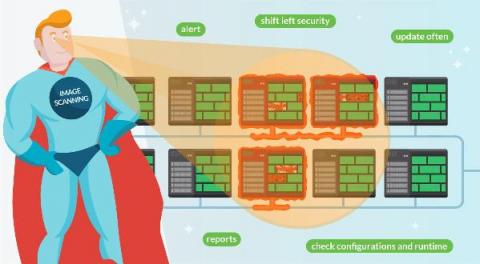
By implementing these vulnerability assessment and vulnerability management best practices you will reduce the attack surface of your infrastructure. We’re human, and many things we build aren’t perfect. That’s why we take our cars for a periodic inspection, or why we have organizations certifying that products are safe to use. Software is no different.
For those of us who need to get applications running in Kubernetes, having Kubernetes on the desktop is incredibly useful. When we want to focus on our applications, it’s especially useful when Kubernetes is easy to use. This is where Rancher Desktop comes in. Rancher Desktop provides easy-to-use Kubernetes and container management (something we’ll look at in a moment) for Mac and Windows. Having Kubernetes isn’t enough.
Welcome to another monthly update on what’s new from Sysdig! Happy Pride month! We hope you are celebrating safely, in whatever manner you choose. It’s been over 50 years since the Stonewall riots, but we continue to fight for equality and justice. Love is love, and we’re sending you all of ours! Thank you to Marsha P. Johnson, Brenda Howard, and countless others for fighting for the freedom that many of us today enjoy.
AWS CloudFormation provides an easy way to model and set up AWS resources to help you save time in deploying the stack you need to run your applications. Today, AWS announced the launch of AWS CloudFormation Public Registry. CloudFormation Public Registry is a searchable collection of extensions that allows you to easily discover, provision, and manage resource types and modules published and maintained by AWS Partner Network (APN) partners like Sysdig.
At Moogsoft we use Jenkins to implement our CICD Pipelines. We run Jenkins where we run most everything else; Kubernetes, but you don’t need to have Jenkins running on Kubernetes to use this plugin. This is made possible by the community maintained Kubernetes plugin. Recently we had the need to not only run agents local to the same cluster that Jenkins runs in, but in other clusters across different regions.
In our first post we went over setting up the Kubernetes Plugin. This described the basic setup of getting the plugin configured, and set with the proper perms to function. In this post we will go over how to leverage the plugin to generate agent pods. At Moogsoft most of our pipelines are scripted and are built inside of, or from parts of, Jenkins shared functions library we maintain.